No products in the basket.
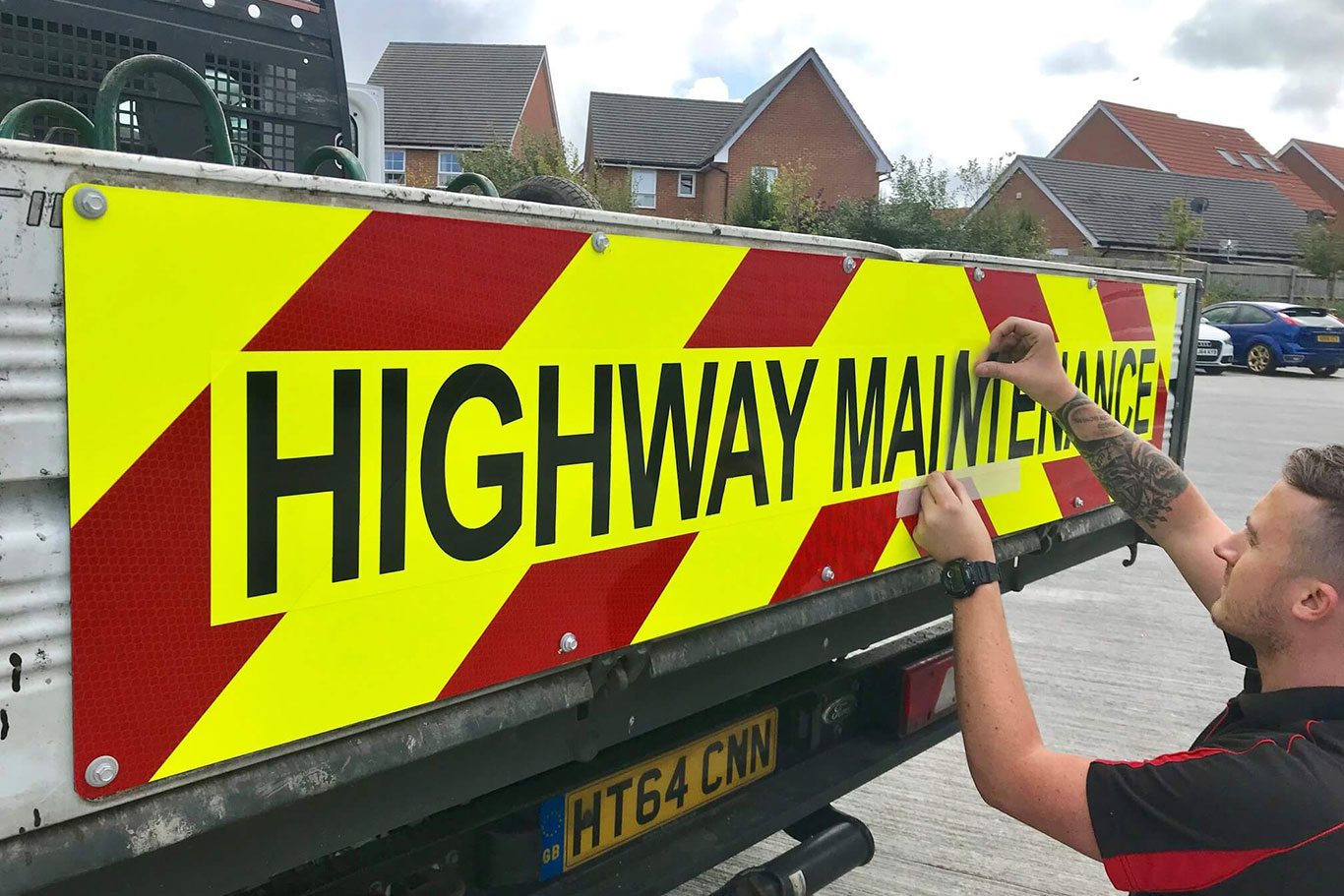
Highway maintenance vehicle markings are essential for keeping workers and road users safe on UK roads. Vehicles operating in live traffic environments must be clearly visible and easily identifiable to reduce the risk of collisions.
For contractors, local authorities and utility providers, understanding the legal requirements for highway maintenance vehicle markings is critical. These markings are not just best practice. In many cases, they are expected as part of safe working procedures.
Highway maintenance vehicle markings refer to the combination of visual elements applied to vehicles working on or near roads. These typically include:
Together, these markings help:
While specific requirements can vary depending on the situation, highway maintenance vehicle markings are widely governed by guidance such as Chapter 8.
Chapter 8 is not a strict law, but it is treated as the recognised standard for safe working on UK roads. Failure to follow it can result in:
Chevron patterns in red and fluorescent yellow are one of the most recognisable requirements.
They:
Vehicles must use high-quality reflective materials that remain visible:
Temporary or permanent signs may be required to:
A highway maintenance team working on a dual carriageway relies on properly marked vehicles to create a safe working zone. Without clear markings, approaching drivers may not recognise the hazard early enough to slow down or change lanes.
With compliant highway maintenance vehicle markings, vehicles are visible well in advance, giving drivers time to react safely.
Non-compliant or inadequate markings can lead to:
Even small issues, such as faded chevrons or poorly placed markings, can reduce effectiveness and increase risk.
While both must meet safety expectations, there can be differences in:
However, the core principles of visibility and safety remain the same.
Markings must withstand:
To ensure ongoing compliance:
Maintaining markings is just as important as installing them.
Effective highway maintenance vehicle markings use a layered approach.
This ensures vehicles are visible and clearly understood by other road users.
Q1: Are highway maintenance vehicle markings mandatory?
A: While based on guidance, they are widely expected and essential for safe operation on UK roads.
Q2: How often should markings be replaced?
A: This depends on wear and exposure, but regular inspections should identify when replacement is needed.
Q3: Do all roadwork vehicles need the same markings?
A: Requirements can vary, but visibility and safety standards apply across all vehicles.
Highway maintenance vehicle markings are a critical part of working safely on UK roads. They improve visibility, communicate hazards and help prevent accidents.
Ensuring your vehicles are properly marked supports compliance, protects workers and demonstrates professional standards.
If your vehicles operate in highway environments, investing in high-quality, compliant markings is essential for safety and reliability.
Phone: 023 9252 0333
Email: info@allaboutchevrons.com
Find out more: https://allaboutchevrons.com/
View the Chapter 8 compliance guide.