No products in the basket.
If a work vehicle is not Chapter 8 compliant, the immediate issue is not just whether the van looks unfinished. The bigger concern is whether it is suitable for the environment it is being used in, especially if it operates on or near public roads, live traffic, highways, verges, roadworks or temporary traffic management areas.
Chapter 8 is part of the UK Traffic Signs Manual, which provides guidance for traffic safety measures and signs used in road works and temporary situations. GOV.UK lists Chapter 8 as guidance for temporary traffic management arrangements used for maintenance activities and temporary situations.
For businesses, a non-compliant or poorly marked vehicle can create safety concerns, contract problems, site access issues and reputational damage. In some cases, it may also mean the vehicle is not accepted for certain types of roadside or highways work until suitable markings are fitted.
Supporting Questions:
What does Chapter 8 compliance mean for work vehicles?
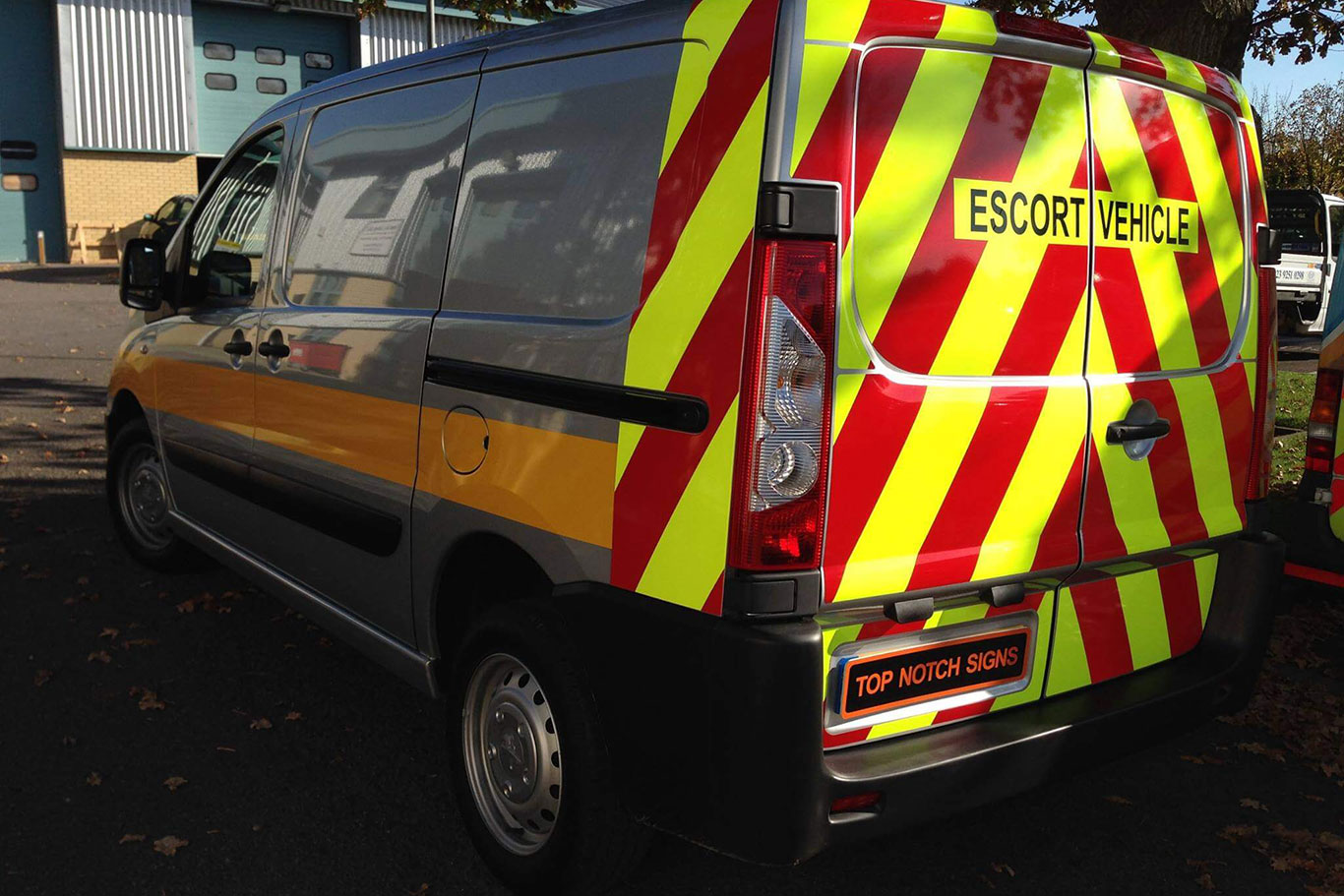
In practical terms, Chapter 8 compliance usually refers to whether a vehicle has suitable high-visibility markings for the type of roadside or highway work it is being used for. For many vans and commercial vehicles, this includes rear chevron markings in red and yellow, along with appropriate reflective or conspicuity materials depending on the vehicle and use case.
The aim is to make the vehicle more visible to other road users. This is especially important when a vehicle is stopped, moving slowly, parked at the roadside, entering a works area or operating near traffic.
A Chapter 8 compliant vehicle may need to consider:
The exact expectations can vary depending on what the vehicle does, where it is used and what the client or contractor requires. A van used by a highway maintenance team may face different expectations from a van used mainly for private site work.
Is Chapter 8 a legal requirement or best practice?
This is where some confusion often happens. Chapter 8 is guidance, but it is widely treated as a standard of good practice for vehicles involved in road works, highways maintenance and temporary traffic management. That means it can still have serious practical importance, even where a business is thinking in terms of contract compliance rather than simple road legality.
The official Traffic Signs Manual includes Chapter 8 guidance for road works and temporary situations. Part 2 covers operations and includes vehicle requirements for temporary traffic management activity. One GOV.UK-hosted Chapter 8 Part 2 result includes references to van-type vehicles with full-height rear retroreflective chevron markings in relevant operational contexts.
For businesses, the key point is this: whether or not Chapter 8 is described as guidance, it is commonly used by clients, principal contractors, local authorities and highways organisations when deciding whether vehicles are suitable for roadside work.
So the practical question is not only “Is it illegal?” It is also:
If the answer to any of these is uncertain, the vehicle should be reviewed before being used in that environment.
What are the safety risks of not having Chapter 8 markings?
The most obvious risk is reduced visibility. A work vehicle parked or moving near traffic can become a hazard if drivers do not notice it early enough. Rear chevrons and reflective markings help make the vehicle stand out, particularly when seen from behind.
This matters in real-world conditions such as:
A plain white van may be visible in normal daylight, but it may not provide enough visual warning in more difficult conditions. Reflective vehicle markings are intended to increase conspicuity when headlights or other light sources catch them.
If a vehicle is not marked clearly enough, other road users may have less time to react. That can increase the risk of near misses, sudden braking, side swipes or rear-end collisions, especially on faster roads or busy routes.
Yes, this can happen. Many highways, utilities, construction and traffic management environments have strict site rules. A vehicle that is not suitably marked may be refused access, prevented from working near live traffic or flagged during a safety inspection.
This can cause practical problems for the business. A team may arrive ready to work, only to find that the vehicle cannot be used for the task. That can lead to delays, wasted labour, rescheduling costs and friction with the client.
For subcontractors, this can be especially damaging. If a principal contractor expects Chapter 8 vehicle markings and a subcontractor arrives with an unsuitable vehicle, it may affect confidence in the business’s professionalism.
Common consequences can include:
The cost of fitting proper markings is often small compared with the cost of turning up to a job and not being allowed to proceed.
Can lack of Chapter 8 compliance affect contracts?
Yes. Many commercial contracts, especially in highways, utilities, local authority, infrastructure and maintenance work, include health and safety expectations. These may refer directly to Chapter 8, or they may require vehicles to be appropriately marked for roadside operations.
If a vehicle does not meet those requirements, the business may be in breach of contract conditions or site procedures. Even where the contract wording is less specific, the client may still expect vehicles to follow recognised standards of good practice.
This is why fleet managers often treat Chapter 8 markings as part of operational readiness. The markings are not just a visual extra. They help demonstrate that the business understands the working environment and has prepared its vehicles accordingly.
For businesses tendering for work, compliant vehicle markings can also support credibility. A fleet that is properly marked, consistent and suitable for roadside work sends a clear message that the company takes safety seriously.
What happens if there is an incident involving a poorly marked vehicle?
If an incident occurs, vehicle markings may become part of the wider investigation. That does not mean the absence of chevrons automatically decides responsibility, but it can raise questions about whether the vehicle was suitable for the work being carried out.
After a collision, near miss or safety complaint, investigators, insurers, clients or internal health and safety teams may look at:
If the vehicle was being used in a roadside environment without suitable markings, the business may find it harder to show that reasonable precautions were taken.
This is one of the main reasons to avoid a “that will probably do” approach. The markings should be appropriate for the job before the vehicle is sent out.
Does every work vehicle need full Chapter 8 markings?
Not every commercial vehicle will need the same markings. A van used only for standard deliveries to private premises may not need the same rear chevrons as a highways maintenance vehicle. A vehicle that regularly stops on public roads, works near traffic or operates in temporary traffic management settings is more likely to need Chapter 8 style markings.
The decision should be based on vehicle use, not just vehicle type.
A business should consider Chapter 8 markings if the vehicle is used for:
If the vehicle sometimes works in these environments, it may still be worth fitting suitable markings. Work patterns can change, and a vehicle that is usually used on-site may occasionally be required for roadside tasks.
Are partial or low-quality markings a problem?
They can be. A vehicle may have red and yellow markings but still not be suitable if the markings are too small, non-reflective, badly placed, worn, faded or poorly fitted.
Common issues include:
A vehicle may look marked at a glance, but the markings still need to be practical and effective. If rear-facing equipment obscures the chevrons, additional high-visibility markings may be needed on the equipment itself. A trade source summarising Chapter 8 guidance notes that where chevrons are obscured by equipment mounted on the vehicle, additional rear-facing high-visibility markings should be applied to the equipment face.
This is particularly relevant for vehicles with tail lifts, mounted machinery, tow equipment or other rear attachments.
Could insurance be affected?
Insurance terms vary, so it is not possible to say that every insurer will respond in the same way. However, after an incident, insurers may consider whether the vehicle was being used appropriately and whether reasonable safety measures were in place.
If a vehicle was being used for roadside work without suitable markings, questions could be asked. That may not automatically invalidate cover, but it could complicate the claims process or raise concerns about risk management.
For fleet operators, it is usually better to remove that uncertainty by ensuring vehicles are correctly marked for their role. Keeping records of vehicle specifications, markings, fitting dates and maintenance checks can also support better fleet management.
What should you do if your vehicle is not Chapter 8 compliant?
If you think a vehicle is not suitable for Chapter 8 work, the first step is to review how it is being used. Do not assume every van needs the same setup, but do not ignore the risk if the vehicle works near traffic.
A practical review should cover:
If the vehicle is used for relevant roadside work and does not have suitable markings, it should be updated before being used in that environment. For many vans, a vehicle-specific Chapter 8 chevron kit is the most straightforward route because it is designed around the rear layout of the vehicle.
For suitable options, see /chapter-8-chevrons or browse vehicle-specific kits at /chevron-kits.
How can fleet managers reduce compliance problems?
Fleet managers can reduce problems by treating vehicle markings as part of normal fleet control. Rather than waiting until a site rejects a van or a client raises a concern, it is better to standardise what each vehicle type needs.
A simple process could include:
This is especially important for businesses with mixed fleets. One vehicle may be fully suitable, while another older van may be missing markings or may have outdated graphics. A regular review helps keep the fleet consistent.
Frequently Asked Questions
Can I drive a van without Chapter 8 chevrons?
For ordinary driving, a van does not automatically need Chapter 8 chevrons. However, if it is used for highways, roadside work, traffic management, utilities or similar environments, suitable markings may be expected by clients, contractors or site rules.
Is Chapter 8 only for motorway work?
No. Chapter 8 is strongly associated with highways and temporary traffic management, but the principles can apply to many roadside environments, including local roads, verges, utility works and maintenance operations.
What if my vehicle only occasionally works near roads?
If a vehicle occasionally works near live traffic, it is worth reviewing whether it needs suitable rear chevrons. Occasional use can still create risk, and clients may still expect appropriate markings.
Can worn chevrons make a vehicle non-compliant?
Yes, worn, faded, peeling or damaged chevrons may reduce visibility and may not be suitable for professional use. Vehicle markings should be kept in good condition and replaced when they no longer perform properly.
Do company logos affect Chapter 8 compliance?
They can if they interfere with the visibility or clarity of the chevrons. Branding should be designed carefully so the rear markings remain clear, professional and suitable for the vehicle’s working environment.
Final thoughts
If a work vehicle is not Chapter 8 compliant, the risk is not limited to appearance. It can affect safety, site access, contract performance, insurance discussions and client confidence. For vehicles used on or near public roads, clear rear markings are part of showing that the business takes roadside safety seriously.
The best approach is to assess the vehicle’s actual use, check any contract requirements and fit suitable markings before problems arise. A properly marked vehicle is easier to see, more professional and better prepared for demanding roadside work.
All About Chevrons supplies Chapter 8 chevrons, vehicle chevron kits, custom chevrons and reflective safety markings for commercial vehicles across the UK. To explore suitable markings, visit /chapter-8-chevrons, browse /chevron-kits or discuss tailored fleet options at /custom-chevrons.
Phone: 023 9252 0333
Email: info@allaboutchevrons.com
Find out more: https://allaboutchevrons.com/
View the Chapter 8 compliance guide.