No products in the basket.
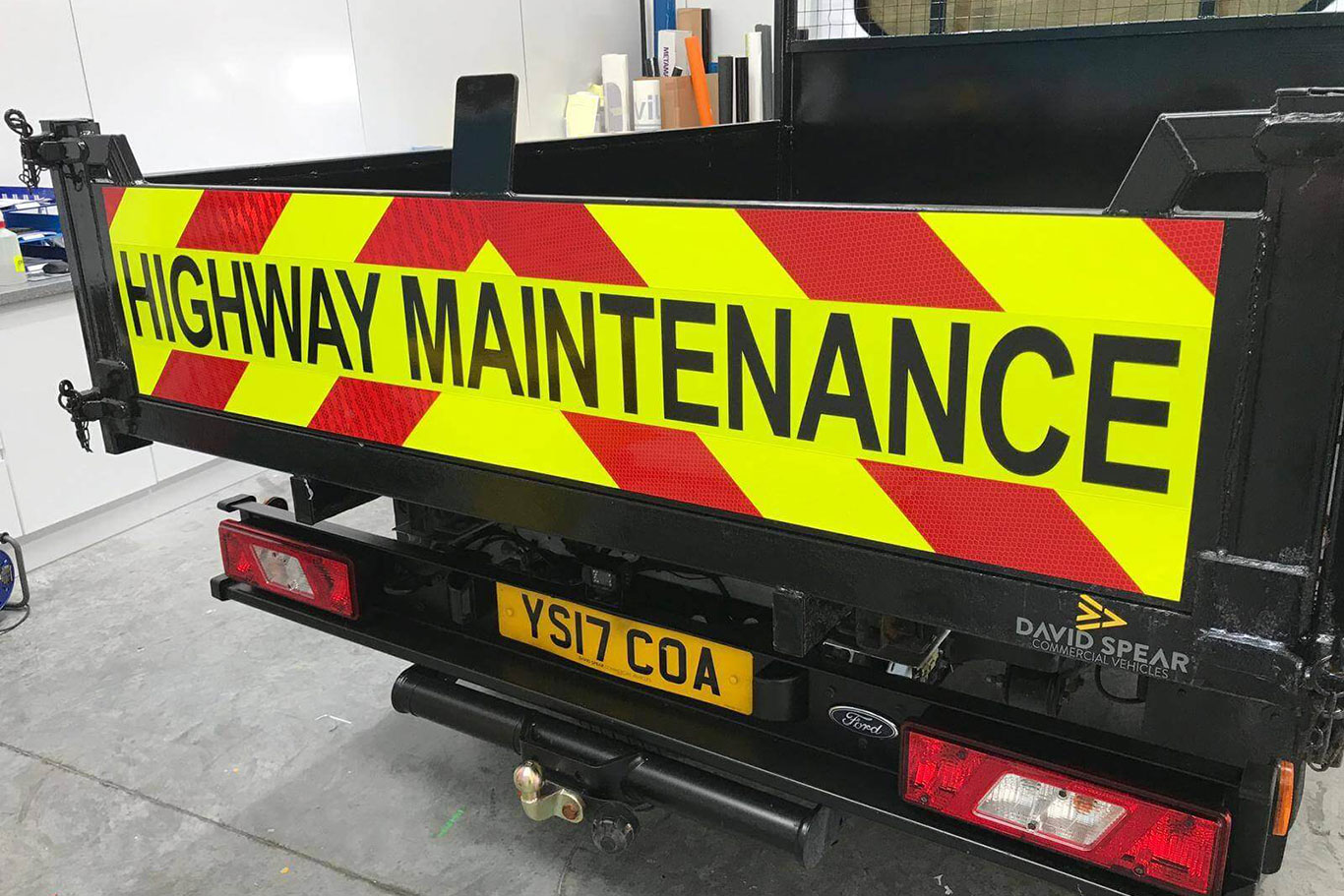
Hazard markings help other road users by making work vehicles, equipment and potential risks easier to see, recognise and respond to. On busy roads, worksites, depots and public spaces, people often have only a few seconds to understand what is happening around them. Clear hazard markings give drivers, cyclists, pedestrians and site workers an early visual cue that they need to take extra care.
For commercial vehicles, hazard markings are especially useful when a van or fleet vehicle stops near traffic, moves slowly, works close to the carriageway or operates in low-light conditions. Rear chevrons, reflective strips and high-visibility markings all help make the vehicle stand out from ordinary traffic.
This matters because a work vehicle is often doing something unexpected. It may be parked in a lay-by, positioned near roadworks, stopped outside a property, reversing into a site, entering a depot or operating alongside pedestrians. Hazard markings help reduce uncertainty by making the vehicle’s presence and purpose more obvious.
Supporting Questions:
What are hazard markings used for on work vehicles?
Hazard markings are used to warn other people that a vehicle, surface, object or working area needs extra attention. On work vehicles, this usually means making the vehicle more visible and helping people understand that it may be operating in a higher-risk environment.
Vehicle hazard markings can include rear chevrons, reflective strips, conspicuity markings, warning panels and other high-visibility graphics. They are commonly used on vans, pickups, trucks, trailers and specialist vehicles that work near traffic, pedestrians or busy sites.
The purpose is not just to make the vehicle look different. It is to help people notice the vehicle sooner and respond appropriately.
Hazard markings are particularly useful when a vehicle is:
In these situations, the vehicle may create a temporary hazard simply because it is not moving like normal traffic. The markings help communicate that clearly.
How do hazard markings improve visibility?
Hazard markings improve visibility by using strong colours, contrast and reflective materials to make a vehicle stand out from its surroundings. A plain vehicle can blend into busy roads, dull weather, construction sites or industrial backgrounds. High-visibility markings create a stronger visual signal.
Red and yellow chevrons are a common example on the rear of work vehicles. The alternating pattern is designed to draw attention and make the rear of the vehicle easier to identify. Reflective materials can add visibility when headlights shine on the markings in darker conditions.
This is useful because road users are constantly processing visual information. They are watching traffic lights, signs, road markings, other vehicles, pedestrians, cyclists and hazards. A work vehicle with clear markings is easier to pick out in that busy environment.
Good hazard markings help answer three quick questions for other road users:
The sooner someone can answer those questions, the more time they have to react safely.
How do hazard markings help drivers react sooner?
Reaction time is critical on the road. Drivers need enough time to see a potential hazard, understand it and decide what to do. Hazard markings can support this by making a vehicle noticeable earlier.
For example, a maintenance van parked near a bend may not be immediately obvious if it is plain or poorly marked. If the rear has bright, reflective chevrons, approaching drivers are more likely to notice it and adjust their speed or position.
This does not remove the need for proper traffic management, warning signs or safe working practices. However, vehicle markings are one part of the wider safety picture. They support awareness and help reduce the risk of a vehicle being overlooked.
Hazard markings can help drivers:
For vehicles working on or near highways, this early recognition is especially important. A vehicle may be stationary, slow-moving or positioned in a way that normal traffic would not be.
Why are reflective hazard markings useful at night?
Reflective hazard markings are useful at night because they return light from vehicle headlights, making the markings more visible in low-light conditions. This can be important for vehicles that work during winter, early mornings, evenings, emergency callouts or overnight maintenance.
A bright colour may be easy to see in daylight, but it may be less effective once light levels drop. Reflective materials help maintain visibility when natural light is limited.
Reflective markings can be particularly useful in:
This is one reason why material choice matters. A marking that looks bright in a product photo may not perform well in real working conditions if it is not reflective or not suitable for vehicle use.
How do hazard markings help cyclists and motorcyclists?
Cyclists and motorcyclists are more exposed than drivers inside vehicles. They may also be more affected by sudden changes in road layout, parked work vehicles or narrowed carriageways. Clear hazard markings help them identify work vehicles earlier and plan a safer route around them.
For cyclists, a marked vehicle at the roadside can signal that the road may narrow, workers may be nearby or temporary equipment may be present. This gives them more time to move out safely, slow down or adjust their line.
For motorcyclists, reflective rear chevrons can help make a stopped or slow-moving vehicle more obvious, especially in poor weather or at night. Because motorcycles can be harder to see and have less physical protection, anything that improves awareness around work vehicles can support safer decisions.
Hazard markings are not a substitute for proper site setup or safe vehicle positioning, but they are a useful visual warning for more vulnerable road users.
How do hazard markings help pedestrians?
Pedestrians also benefit from clear vehicle hazard markings, particularly in public spaces, car parks, works areas, schools, retail parks and residential streets. A marked vehicle is easier to recognise as part of a work activity, which can encourage pedestrians to keep a safe distance.
This can be especially relevant when vehicles are reversing, loading, unloading or working near footpaths. Pedestrians may not always hear an electric vehicle or may not expect a van to move in a shared space. High-visibility markings help draw attention to the vehicle.
For local authorities, utilities, facilities management and construction contractors, marked vehicles can also reassure members of the public that the vehicle is there for a legitimate work purpose. This can reduce confusion, especially when teams are working outside homes or public buildings.
Where are hazard markings most useful?
Hazard markings are most useful wherever a vehicle could be missed, misunderstood or approached too quickly. This includes roads, sites, depots and shared public areas.
Common environments include:
A vehicle does not need to be on a motorway for hazard markings to be useful. Many incidents and near misses happen in lower-speed environments where vehicles and pedestrians are close together. Visibility still matters in these situations.
What types of vehicles use hazard markings?
A wide range of commercial vehicles can use hazard markings. The right layout depends on vehicle type, working environment and visibility requirements.
Vehicles that often benefit include:
For vans and commercial vehicles working near public roads, rear chevrons are often the most recognisable hazard marking. For other vehicles, reflective strips or targeted hazard markings may be enough, depending on use.
How do rear chevrons work as hazard markings?
Rear chevrons are one of the clearest forms of vehicle hazard marking. They use a strong diagonal pattern, typically in red and yellow, to make the rear of the vehicle more conspicuous.
The rear of a vehicle is particularly important because many road users approach from behind. A van stopped at the roadside or moving slowly ahead needs to be seen early. Rear chevrons help draw attention to the back of the vehicle and signal that extra care may be needed.
Vehicle-specific rear chevron kits are useful because they are designed to fit the rear layout of a particular van or commercial vehicle. This helps avoid awkward cuts, blocked lights or untidy fitting. For suitable options, see /chevron-kits.
Can hazard markings support Chapter 8 compliance?
Hazard markings can support Chapter 8 suitability when they are designed and fitted appropriately for vehicles working on or near roads. Chapter 8 is commonly associated with roadworks, highways operations and temporary traffic management, where vehicle visibility is an important consideration.
For vehicles used in these environments, a properly designed Chapter 8 chevron kit can help demonstrate that the vehicle is suitable for roadside work. The markings need to be clear, durable and appropriate for the vehicle’s role.
However, businesses should not assume that any bright marking is automatically suitable. Material quality, layout, reflectivity and coverage all matter. It is also important to check any client, contractor or site-specific requirements.
For more relevant guidance, visit /chapter-8-chevrons.
Do hazard markings help with professional appearance?
Yes. While the main purpose is visibility and safety, hazard markings can also improve how a work vehicle looks. A properly marked van appears more professional, prepared and suitable for commercial use.
This can matter when vehicles are seen by clients, members of the public, site managers or local authorities. A fleet with consistent markings gives the impression that the business has thought carefully about safety, compliance and presentation.
Custom chevrons can also include company branding, provided the design does not reduce the visibility of the safety markings. This can help businesses combine fleet identity with practical hazard marking. For tailored options, visit /custom-chevrons.
What makes hazard markings effective?
Effective hazard markings are clear, durable and suitable for the environment. They should be easy to recognise quickly and should not be hidden by vehicle features or equipment.
Important factors include:
The markings should also be kept clean. Road dirt, mud, salt and grime can reduce visibility, especially during winter. Fleet teams should include markings in routine vehicle checks so damaged or faded areas can be replaced.
What happens if hazard markings are poor or damaged?
Poor or damaged hazard markings may give a false sense of security. A vehicle may appear to be marked, but the markings may not perform properly if they are faded, peeling, non-reflective or hidden by equipment.
This can reduce visibility and may also make the vehicle look poorly maintained. For businesses working on contracts or public sites, that can affect confidence as well as safety.
Common issues include:
If hazard markings are worn or unsuitable, they should be replaced. For many vans, a fresh vehicle-specific kit is the simplest way to restore a clear, professional finish.
Frequently Asked Questions
Are hazard markings only needed on the rear of a vehicle?
The rear is often the most important area because other road users usually approach from behind. However, side markings, reflective strips or additional hazard markings may also be useful depending on the vehicle and how it is used.
Do hazard markings need to be reflective?
Not all hazard markings need to be reflective, but reflective materials are strongly recommended for vehicles used in low light, poor weather, night work or roadside environments. Reflective markings help headlights pick out the vehicle more clearly.
Can hazard markings be added to older vans?
Yes. Hazard markings can usually be added to older vans, provided the surface is suitable and the vehicle layout is checked. Existing damage, rust, poor paint condition or old graphics may need attention before fitting.
Do hazard markings replace warning signs or traffic management?
No. Hazard markings support visibility, but they do not replace proper traffic management, warning signs, safe systems of work or driver responsibility. They are one part of a wider safety approach.
Can hazard markings include branding?
Yes, branding can be included on some vehicle marking designs, but it should not reduce clarity or visibility. A simple logo or contact detail usually works better than a cluttered rear layout.
Final thoughts
Hazard markings help other road users by making work vehicles easier to see, understand and react to. They support safer decision-making for drivers, cyclists, pedestrians and site teams, especially where vehicles stop, move slowly or operate near traffic.
For businesses, the right markings can also support compliance, fleet consistency and professional presentation. The key is to choose markings that are suitable for the vehicle, the working environment and the level of visibility required.
All About Chevrons supplies hazard markings, Chapter 8 chevrons, vehicle chevron kits, custom chevrons and reflective safety markings for work vehicles across the UK. To explore suitable options, visit /chapter-8-chevrons, browse /chevron-kits or discuss tailored fleet markings at /custom-chevrons.
Phone: 023 9252 0333
Email: info@allaboutchevrons.com
Find out more: https://allaboutchevrons.com/
View the Chapter 8 compliance guide.