No products in the basket.
Hazard markings and chevrons both make vehicles, equipment and potential obstructions easier to identify, but the terms do not describe exactly the same thing.
Hazard markings are a broad category of high-contrast or reflective markings used to draw attention to a vehicle, object, edge or area that may present a risk. Chevrons are a specific type of directional pattern formed from diagonal stripes arranged in a V shape.
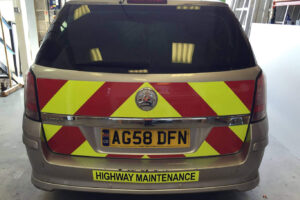
On UK road-working vehicles, rear chevrons are commonly used to make the back of the vehicle more conspicuous to approaching drivers. Other hazard markings may be fitted to the sides of the vehicle, door edges, equipment lockers or projecting equipment.
The difference matters because a product described as hazard tape is not automatically suitable for creating compliant rear chevrons. The design, colours, dimensions, material and final position must all be appropriate for the intended use.
What are hazard markings?
The term “hazard markings” can describe many different products and patterns. Their general purpose is to make a potential danger, obstruction or unusual feature more noticeable.
In a vehicle context, hazard markings may be used to identify:
Some hazard markings use alternating colours, while others consist of a single strip of reflective material. They may be fluorescent, retroreflective, high contrast or a combination of these properties.
The term is also used outside the vehicle sector. Black and yellow striped tape, for example, is widely used around steps, low beams and industrial machinery. A product intended for an indoor warehouse is not necessarily appropriate for a vehicle travelling on public roads.
When ordering vehicle hazard markings, businesses need to look beyond the product name and check what the material is designed to do.
What are chevron markings?
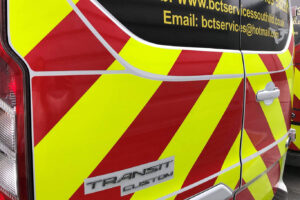
Chevron markings consist of diagonal strips arranged so that they form a repeated V-shaped pattern. On the rear of a van, the stripes normally point upwards towards the centre.
This creates a clear directional pattern that helps drivers identify the rear-facing surface of the vehicle. The alternating colours increase contrast, while the reflective elements improve visibility when illuminated by headlights.
Chevron markings are commonly associated with:
For vehicles covered by Chapter 8 guidance, the arrangement is more specific than simply applying diagonal red and yellow stickers.
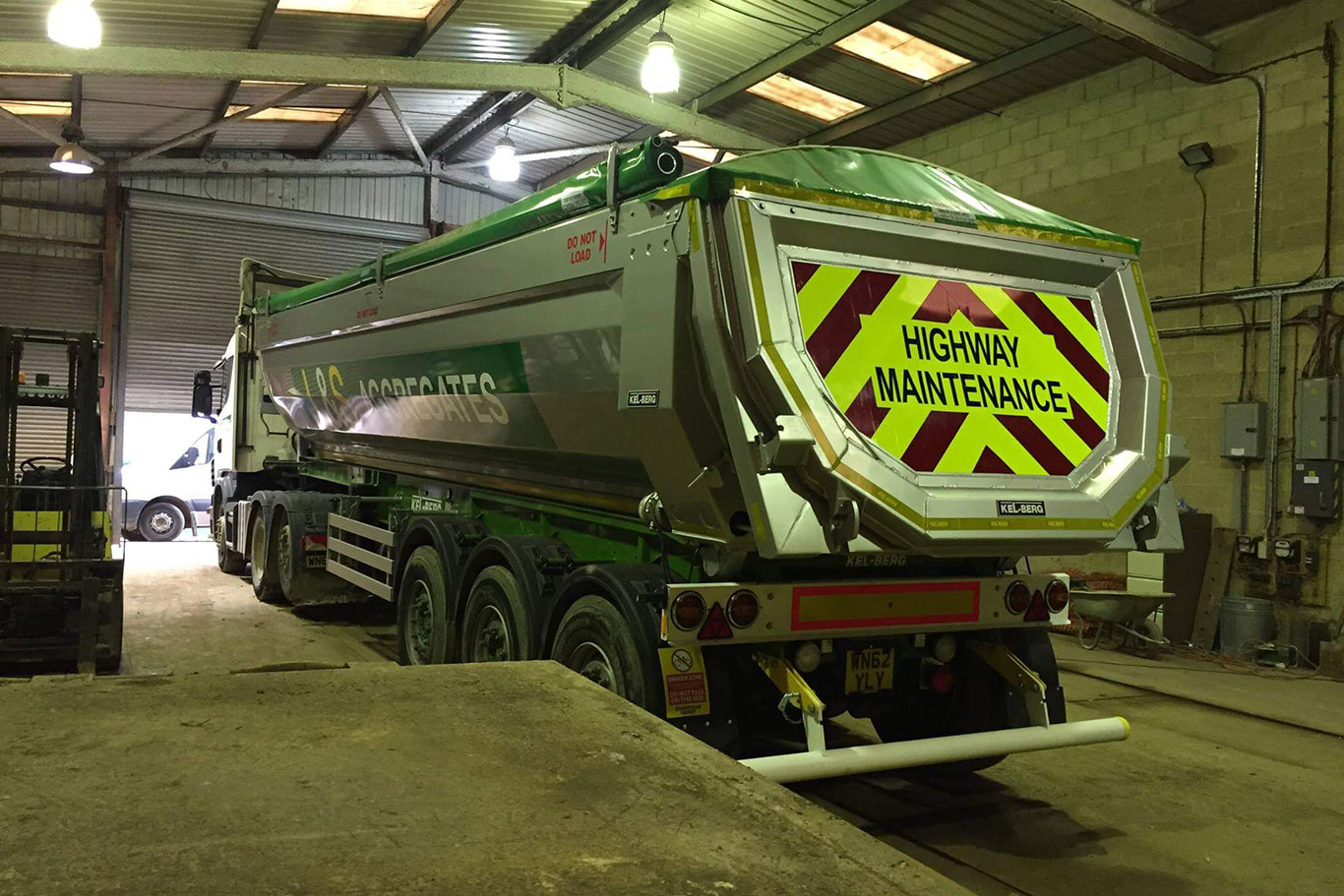
The Department for Transport’s Traffic Signs Manual states that chevron markings used as a high-visibility rear-marking option should comprise alternating fluorescent orange-red retroreflective and fluorescent yellow strips. The strips should be at least 150 mm wide, inclined between 45 and 60 degrees and point upwards.
The markings should cover as much of the suitable rear-facing area as possible without obscuring windows, vehicle lights or registration plates.
How do hazard markings and chevrons compare?
The following comparison highlights the main differences:
| Feature | Hazard markings | Chevron markings |
| Meaning | A broad category of warning and visibility markings | A specific pattern of diagonal stripes forming repeated V shapes |
| Main purpose | Highlights an object, edge, area or potential hazard | Makes a vehicle’s rear more conspicuous and recognisable |
| Typical position | Sides, edges, doors, equipment, steps or rear surfaces | Primarily the rear-facing bodywork of a vehicle |
| Pattern | May be a solid strip, blocks or diagonal bands | Alternating diagonal stripes pointing towards the centre |
| Colours | Vary according to the use and applicable specification | Commonly fluorescent yellow and orange-red for Chapter 8 applications |
| Reflectivity | May be reflective, fluorescent or non-reflective | Material performance must suit the relevant vehicle specification |
| Compliance | Depends on product, layout and intended use | Can form part of a Chapter 8 vehicle treatment when correctly specified and fitted |
| Vehicle fit | Often supplied as tape or individual sections | Frequently supplied as a vehicle-specific pre-cut kit |
There can be overlap between the two categories. Rear chevrons are a form of vehicle hazard marking, but not every hazard marking is a chevron.
Do hazard markings and chevrons have the same purpose?
They share the general aim of improving visibility, but they often draw attention to different things.
A rear chevron pattern identifies a large rear-facing surface. It helps approaching drivers recognise that they are seeing the back of a conspicuous working vehicle.
A narrow reflective strip on the edge of an open door performs a different role. It draws attention to a specific edge that might otherwise be difficult to see when the door is open.
Similarly, side markings can help define the length or profile of a vehicle at a junction or work-site entrance. They do not create the same rear-facing warning pattern as chevrons.
A well-planned commercial vehicle may therefore use several types of marking together:
These elements should form a consistent visibility system rather than being added without an overall plan.
Are all red and yellow stripes chevrons?
No. Diagonal red and yellow stripes may resemble chevrons without meeting the relevant layout or material specification.
Several details can make a difference:
Decorative vinyl can imitate the appearance of safety markings in daylight but offer little benefit when illuminated at night. Similarly, narrow hazard tape may not provide the coverage or stripe width expected for a Chapter 8 rear treatment.
Businesses should not judge suitability by colour alone.
Is reflective hazard tape the same as chevron tape?
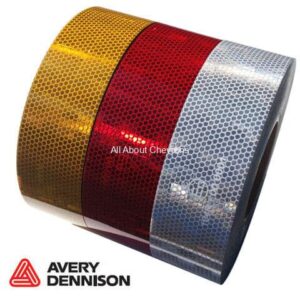
Reflective hazard tape is usually supplied as a roll or strip that can be cut to length. Chevron tape may also be roll-based, but its name can refer either to material used to build a chevron pattern or to tape already printed with diagonal stripes.
Neither description confirms that the product meets a particular road-working specification.
Before using tape on a vehicle, check:
Tape can be useful for custom layouts, unusual commercial bodies and repairs. However, creating a full rear treatment from individual strips requires accurate measuring and alignment.
A vehicle-specific kit is normally cut around the lights, number plate, handles and hinges. This can reduce on-vehicle trimming and help maintain a consistent pattern.
Can hazard markings be used instead of Chapter 8 chevrons?
Generic hazard markings should not be treated as an automatic substitute for Chapter 8 chevrons.
If a van is being prepared for road works, inspections or temporary traffic-management duties, the required specification should be confirmed before markings are ordered. A client may specifically require Chapter 8-style rear chevrons, a “HIGHWAY MAINTENANCE” sign, warning beacons and additional side markings.
A few strips of reflective tape may improve general visibility, but they may not provide the layout, coverage or identification required by the contract or safe system of work.
Chapter 8 is also broader than vehicle markings. Compliance can involve:
A vehicle cannot be described as fully Chapter 8 compliant simply because it has some reflective material on the rear.
Where should hazard markings be fitted?
Placement depends on the risk that needs to be highlighted.
Rear-facing edges
Open doors, equipment lockers, guardrails and other rear-facing components can obscure or interrupt the vehicle’s main visibility treatment. Suitable reflective edge markings can help other road users recognise these surfaces.
Side panels
Side markings can improve visibility when the vehicle is viewed from a junction, side road or work-site access. They may be particularly useful on long vehicles or when the main body colour provides limited contrast.
Steps and working areas
High-contrast markings can draw attention to steps, loading platforms and other areas where workers may trip or encounter moving equipment. The material must be suitable for the surface and environment.
Tail lifts and attachments
A lowered tail lift can present a significant obstruction. Markings may be needed to make its edges or exposed surfaces easier to identify.
Equipment that covers rear chevrons
If a permanent attachment obscures part of the rear pattern, additional markings may be required on the surface that is now visible to approaching traffic. This should be considered during the vehicle’s design or modification process.
Where should rear chevrons be fitted?
Rear chevrons should cover as much suitable rear-facing bodywork as possible while leaving essential features clear.
They must not obstruct:
The exact layout depends on the van. Twin rear doors, tailgates, windows, external hinges and aftermarket equipment all affect the available area.
Vehicle-specific chevron kits are designed around a particular rear-door arrangement. A standard kit may need adapting if the vehicle has been converted or fitted with unusual equipment.
What materials are used for vehicle markings?
Vehicle visibility products can use fluorescent, retroreflective and standard coloured vinyl. These terms describe different properties.
Fluorescent material
Fluorescent material is designed to appear especially bright during daylight and certain low-light conditions. It converts some ultraviolet light into visible light, helping the colour stand out.
Fluorescence does not necessarily mean that the material reflects headlights at night.
Retroreflective material
Retroreflective material returns light towards its source. When vehicle headlights illuminate it, much of the light is directed back towards the approaching driver.
Reflectivity can vary between materials. A product being described as reflective does not provide enough information to establish its suitability for a particular application.
Standard coloured vinyl
Ordinary vinyl can provide colour and contrast but does not necessarily offer fluorescent or retroreflective performance. It may be suitable for branding but should not be assumed to provide the same safety benefits as specialist visibility material.
The correct combination depends on the intended use and relevant specification.
Can hazard markings and fleet branding be combined?
Yes, but safety information should remain clear.
Logos, contact details and brand colours can be incorporated around vehicle visibility markings, provided they do not interrupt the chevron pattern, cover reflective areas or make the rear design difficult to interpret.
Potential problems include:
A planned custom chevron layout can account for the vehicle, required safety treatment and company identity together.
How should businesses choose the correct markings?
Begin with the vehicle’s actual work rather than the appearance of the product.
Ask:
If the requirement remains unclear, speak to the highway authority, principal contractor, traffic-management specialist or person responsible for the work’s risk assessment.
Frequently Asked Questions
Are chevrons a type of hazard marking?
Yes. Chevrons fall within the broader category of hazard and visibility markings, but they use a specific directional pattern. Other hazard markings may consist of straight strips, blocks or edge tape.
Are black and yellow hazard stripes suitable for van chevrons?
Not for a standard Chapter 8 rear chevron layout. Black and yellow tape is commonly used to identify workplace hazards, but it should not be assumed to meet road-vehicle visibility requirements.
Do hazard markings have to be reflective?
Not all hazard markings are reflective. Their required properties depend on where they are used and the relevant specification. Vehicle markings intended for night-time visibility often require suitable retroreflective material.
Can hazard tape be fitted to plastic trim?
Some products can adhere to certain plastics, while others require painted bodywork or a specially prepared surface. The material manufacturer’s instructions should be checked before application.
Why do rear chevrons point upwards?
The opposing diagonal strips form a clear, symmetrical pattern across the rear of the vehicle. Chapter 8 specifies that the strips used for this rear treatment should point upwards.
Can chevrons be used on vehicles that do not work on roads?
Yes. A business may choose chevrons to improve general fleet visibility, even where Chapter 8 is not a specific requirement. The design should still be suitable for the vehicle and must not obscure legally required equipment.
Do damaged chevrons still count as hazard markings?
They remain markings, but their safety performance may be reduced. Missing, faded, dirty or peeling sections should be assessed and replaced where they no longer provide effective visibility.
Can straight reflective strips replace rear chevrons?
Straight reflective strips can improve outline visibility but do not create the same rear-facing pattern. They should not be assumed to replace chevrons where a Chapter 8 or contractual specification requires them.
Hazard markings describe a broad range of products used to highlight vehicles, edges, equipment and potential obstructions. Chevrons are a specific form of hazard marking that use alternating diagonal strips to create a recognisable rear-facing pattern.
The right choice depends on what must be made visible. A door edge may need a narrow reflective strip, while a road-working van may require a vehicle-specific rear chevron kit and additional warning equipment.
Product colour and appearance are not enough to establish suitability. Businesses should check the material, pattern, coverage, vehicle fit and applicable work specification before installation.
All About Chevrons supplies professional vehicle safety markings for work vans and commercial fleets. If you need help deciding between a standard kit and an adapted layout, contact the team.
Phone: 023 9252 0333
Email: info@allaboutchevrons.com
Find out more: All About Chevrons