No products in the basket.
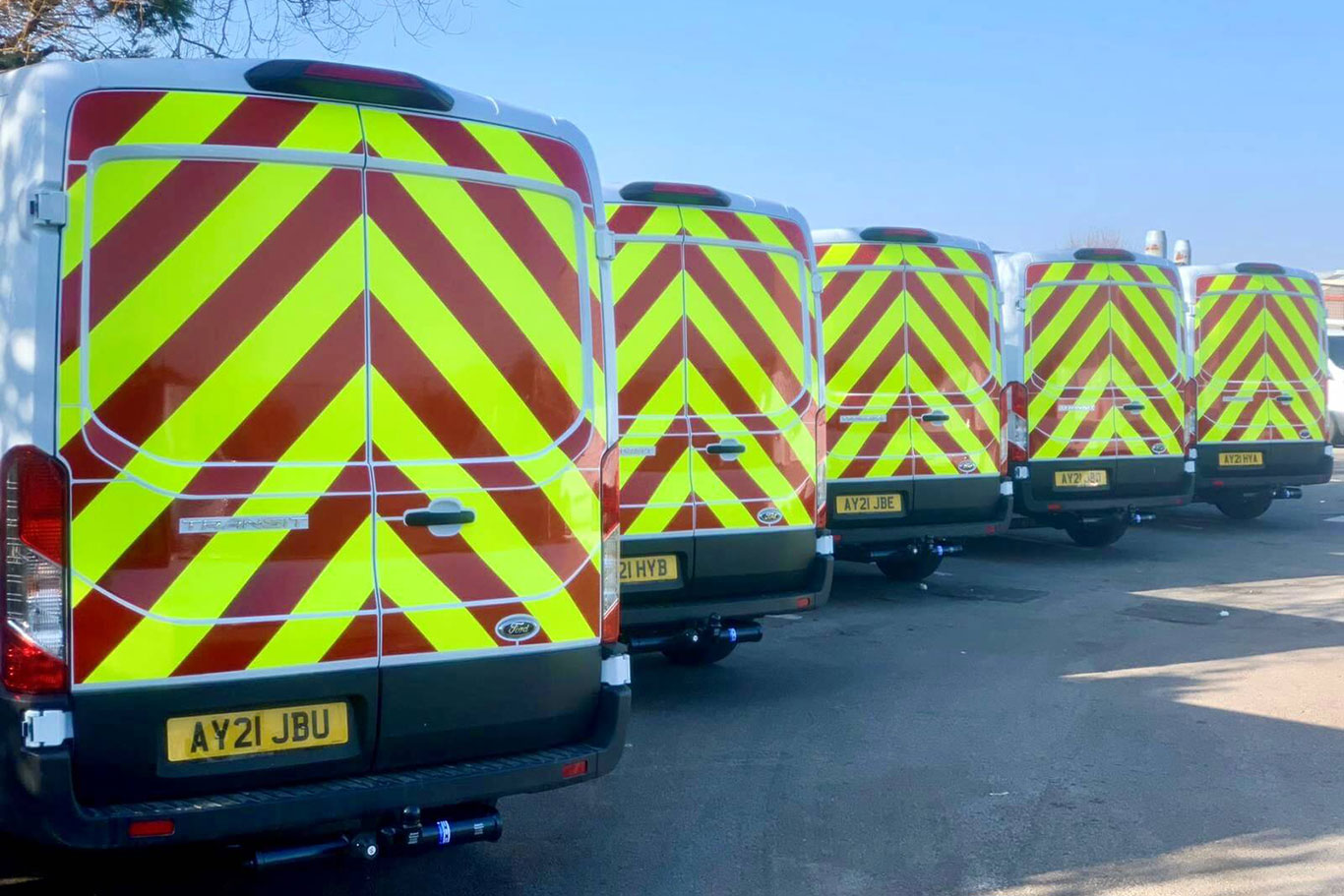
Old vehicle chevrons can make a van unsuitable for work if they have faded, lost reflectivity, become damaged or no longer provide the required rear coverage. However, age alone does not automatically make a chevron kit non-compliant.
A well-maintained kit may remain effective for longer than one exposed to harsh working conditions. Conversely, relatively new markings can fail early if they were installed badly, damaged by equipment or cleaned using unsuitable chemicals.
The correct question is not simply, “How old are the chevrons?” It is, “Do the markings still meet the visibility, condition and coverage requirements that apply to this vehicle?”
For road-working fleets, this assessment should form part of the daily vehicle check, scheduled maintenance and contract-compliance process.
What does non-compliant mean in this context?
The word “compliant” can refer to several different requirements.
A vehicle may be expected to meet:
These requirements should not be treated as interchangeable.
The Department for Transport’s Traffic Signs Manual explains that Chapter 8 provides guidance for road works and temporary traffic-management situations. In Great Britain, Chapter 8 generally operates as a code of practice rather than standalone legislation, although organisations may make compliance a condition of contract.
This means old or damaged chevrons could cause a vehicle to fail a client inspection or breach a work specification without necessarily making the vehicle automatically unlawful to drive in every situation.
The vehicle’s duties, location and contract should all be considered.
Does a chevron kit have a fixed compliance expiry date?
There is no single expiry period that applies to every chevron kit.
Manufacturers may provide expected durability information for particular materials, but this is normally based on specified conditions. Actual service life can be affected by:
Published durability should guide maintenance planning, but it should not replace physical inspection. A marking must remain serviceable throughout its use, regardless of whether it has reached a predicted age.
Similarly, exceeding an estimated product lifespan does not prove that every section failed on a particular date. The fleet operator still needs to inspect and assess its condition.
How can old chevrons become unsuitable?
Several forms of deterioration can reduce the effectiveness of rear markings.
Fading and colour loss
Fluorescent material is intended to provide strong daytime and low-light conspicuity. Continuous exposure to ultraviolet light can gradually reduce its colour intensity.
The signs may include:
Fading can be gradual, making it difficult for a regular driver to notice. Comparing current photographs with older fleet records can help reveal the change.
If the fluorescent colour no longer provides the intended contrast, the markings should be assessed for replacement.
Loss of reflective performance
A chevron can retain much of its colour while returning less light towards approaching drivers.
Retroreflective performance may be affected by:
This is why daylight appearance alone is not enough. Markings should also be checked under suitable low-light conditions using a directed light source.
A torch or vehicle headlights can help identify obvious inconsistencies, but this does not replace formal testing where a contract requires measured performance.
Missing or damaged sections
A complete pattern can become fragmented through everyday work.
Damage may be caused by:
A small cut may not immediately make the entire vehicle unsuitable, but missing sections should not be ignored. Damage can spread as water and dirt enter beneath lifted vinyl.
The severity should be assessed according to the location, amount of lost coverage and applicable specification.
Peeling and adhesive failure
Old adhesive can weaken, particularly where the surface was not prepared correctly or the paint underneath has deteriorated.
Look for:
Loose material can become a maintenance problem as well as a visibility defect. Applying more vinyl or strong adhesive over the top is unlikely to provide a reliable long-term repair.
Delamination and clouding
Reflective products may use more than one layer. When these layers begin to separate, the marking can develop a cloudy or patchy appearance.
Delamination can affect both appearance and reflective performance. Cleaning will not repair it, so the affected section normally needs replacing.
Heavy contamination
Chevrons may be physically sound but too dirty to perform effectively.
Road salt, mud, traffic film and oil can cover the surface and reduce both colour contrast and reflection. Chapter 8 advises that works vehicles should be kept clean to maintain conspicuity.
Cleaning should therefore take place before the material is judged to have permanently faded. If the original colour and reflection return, contamination may have been the main issue.
A vehicle should still not be sent into a road-working environment with its chevrons hidden beneath dirt.
Can an old layout become non-compliant?
The vinyl may remain in reasonable condition while the vehicle or its work changes around it.
For example, the fleet may add:
This equipment may obscure sections of the existing chevrons or reduce the visible rear-facing area.
The vehicle may also be reassigned from general site visits to highway inspections. Its old markings may never have been designed for Chapter 8 duties.
A compliance review should therefore consider:
Good material condition cannot compensate for an unsuitable layout.
Can old chevrons obscure essential equipment?
Poorly planned repairs and ageing material can create problems around lights, number plates and cameras.
Chevrons should not obscure:
A lifted or displaced section may partially cover equipment even if the original layout was correct. New stickers added over the years can also gradually reduce the clear area around lights and number plates.
The inspection should assess the entire rear of the vehicle rather than the chevrons in isolation.
How should old chevrons be inspected?
A useful inspection combines cleaning, daylight assessment and a low-light check.
Clean the surface
Remove road dirt using a method suitable for the material. Allow the markings to dry before deciding whether discolouration is permanent.
Inspect the complete pattern
Stand far enough back to see both doors or the full tailgate. Look for uneven coverage, missing areas and obvious colour differences.
Examine the edges
Check around hinges, handles, lights and panel joins. These areas are more likely to lift or suffer mechanical damage.
Look closely at the surface
Identify scratches, cracks, clouding, bubbles and delamination.
Check under directed light
In a controlled low-light location, view the chevrons with a suitable directed light source. Look for areas that reflect much less strongly than surrounding sections.
Inspect related equipment
Check rear lights, reflectors, maintenance signs, number plates and amber beacons at the same time.
Record the findings
Photograph defects and record the vehicle, date, location and action required. This creates a useful maintenance history.
The DVSA’s guidance on van daily walkaround checks states that drivers should check their vehicles before journeys and record and report relevant defects through the operator’s process.
Specialist markings and warning equipment should be added to the standard checklist where they are fitted.
Who is responsible for checking vehicle chevrons?
Responsibility may be shared between the driver, fleet manager, maintenance provider and person managing the road work.
Drivers should identify obvious problems during pre-use checks, including:
Fleet managers should arrange more detailed scheduled inspections and make decisions about repair or replacement.
The organisation responsible for the work should confirm whether the vehicle meets the contract and traffic-management requirements before it enters the site.
A driver should not be expected to determine complex compliance questions without guidance. The fleet should provide:
Can one damaged chevron section be replaced?
A local repair may be suitable when the damage is limited and a compatible replacement material is available.
The new section should match:
Before replacement, the damaged vinyl should be removed correctly and the underlying surface inspected. Applying new material over old, peeling vinyl is unlikely to produce a secure or even finish.
Partial repair may not be the best option when the surrounding kit is already faded. A bright replacement panel can create an inconsistent appearance and reveal that the remainder of the pattern is approaching the end of its useful life.
When is full chevron replacement more appropriate?
Replacing the complete rear treatment may be more practical when:
A new vehicle-specific chevron kit can provide consistent material and a layout designed around the current rear-door configuration.
Full replacement also creates a clear new installation date for fleet maintenance records.
Should chevrons be replaced on a set schedule?
A planned replacement cycle can help fleets budget and prevent markings from being left in service indefinitely. However, it should operate alongside condition-based inspections.
A vehicle may require earlier replacement after an impact, chemical spill or body repair. Another vehicle may have been stored indoors and remain in good condition at the scheduled review date.
A practical policy can include:
The policy should also address what happens when the material’s specification or installation date is unknown.
Can old chevrons cause a vehicle to fail an MOT?
An MOT is not a complete Chapter 8 compliance inspection.
An MOT checks specified roadworthiness and legal items, including lights, number plates and vehicle condition. It does not confirm that specialist road-working markings meet a client’s Chapter 8 specification.
A van can pass its MOT and still be rejected from a work site because its chevrons are faded, its maintenance sign is missing or its warning equipment does not meet the contract requirements.
Similarly, a chevron kit should not obscure items assessed during the MOT, such as lights or the registration plate.
Fleet operators need both a roadworthiness process and a separate check for specialist work equipment.
What are the consequences of using badly deteriorated chevrons?
The consequences depend on the work and applicable requirements.
Possible outcomes include:
If an accident occurs, the organisation’s vehicle checks, defect reports and maintenance decisions may be examined. Repeatedly ignoring visible deterioration is difficult to reconcile with a well-managed safe system of work.
Frequently Asked Questions
Are chevrons automatically non-compliant after a certain number of years?
No universal age limit applies to every kit. Suitability depends on material specification, condition, visibility, coverage and the requirements applying to the vehicle.
Can faded chevrons be cleaned back to their original colour?
Cleaning can remove traffic film and dirt, but it cannot reverse permanent UV fading or material degradation. If the colour remains weak after cleaning, replacement may be necessary.
Can a reflective test be completed with a mobile phone camera?
Photographs can help record obvious differences, but phone cameras automatically adjust exposure and process images. They should support rather than replace a physical inspection or formal measurement.
Do small scratches make chevrons non-compliant?
Not necessarily. The position, depth and extent of the damage matter. Scratches should be monitored and repaired if they reduce visibility or begin to spread.
Can new chevrons be applied over old ones?
This is generally best avoided. Old material and lifted edges can prevent secure adhesion. Existing vinyl should normally be removed and the underlying surface prepared correctly.
Do chevrons need replacing after body repairs?
Any damaged or removed sections should be replaced. The full pattern should be reviewed after repairs because new panels, paintwork or equipment may affect adhesion and coverage.
Can a vehicle remain in service while replacement chevrons are ordered?
That decision depends on the severity of the defect, the vehicle’s duties and applicable contract. A responsible manager should assess whether the vehicle can be restricted to other work or must be removed from service.
Does a clean kit automatically meet Chapter 8 guidance?
No. Cleanliness is important, but the material, stripe layout, coverage and wider vehicle specification must also be appropriate.
A Step-by-Step Inspection Process
Old chevrons do not become non-compliant simply because of their age. They become unsuitable when deterioration, damage, poor maintenance or changes to the vehicle prevent them from meeting the required visibility and operational standard.
Regular inspection is more reliable than waiting for a driver, client or site manager to complain. Fleet operators should clean markings, check them in daylight and low light, record defects and replace sections before their performance becomes uncertain.
All About Chevrons supplies vehicle-specific Chapter 8 chevrons for professional vans and fleets. If existing markings are faded, damaged or no longer suitable for the vehicle’s role, contact the team for help choosing an appropriate replacement.
Phone: 023 9252 0333
Email: info@allaboutchevrons.com
Find out more: All About Chevrons