No products in the basket.
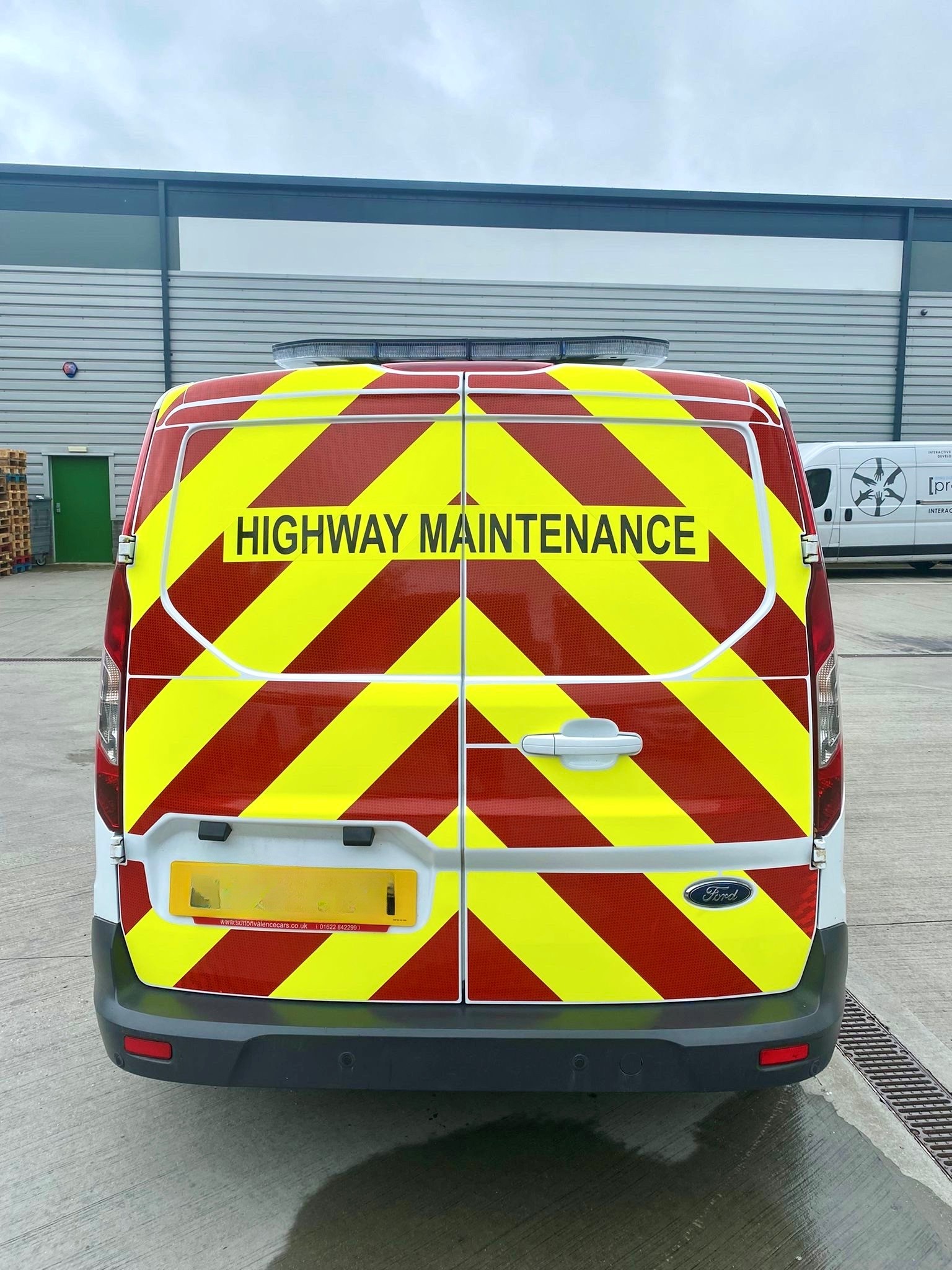
Rear chevrons should cover enough of the back of a van to make the vehicle clearly visible, especially when it is stopped, parked or working near traffic. However, that does not always mean every single part of the rear needs to be covered. The right approach is usually full usable rear coverage, not careless full coverage that blocks lights, number plates, handles, cameras, sensors or windows.
For vans used in highways, utilities, construction, traffic management, local authority work or roadside maintenance, rear visibility is important. A properly designed rear chevron kit helps other road users recognise the van sooner and understand that it may be part of a work activity.
The best rear chevrons are clear, reflective where required, fitted neatly and designed around the actual van. A vehicle-specific kit is usually better than trying to cover the entire rear with generic material, because it can account for the shape and layout of the vehicle.
Supporting Questions:
What does full rear chevron coverage actually mean?
When people ask whether rear chevrons should cover the full back of a van, they usually mean whether the red and yellow markings should extend across most of the rear doors and lower panels. In practical terms, the aim is to make the rear of the van highly visible from behind.
However, “full back” should not be taken too literally. The chevrons should not cover parts of the vehicle that need to remain clear or functional. A good rear chevron layout works with the vehicle design rather than simply covering everything.
Full rear coverage usually means making sensible use of the main rear-facing surface, including the doors and lower panels where suitable. It does not mean blocking safety-critical or legally required features.
Rear chevrons should avoid obstructing:
The best result is a rear layout that looks highly visible, professional and practical.
Why is rear visibility important for vans?
Rear visibility matters because other road users often approach a work van from behind. If the van is parked at the roadside, moving slowly, stopping frequently or operating near traffic, drivers need to notice it early enough to react safely.
A plain van can be easy to miss in poor weather, low light or visually busy environments. This is especially true during winter mornings, dark evenings, heavy rain, road spray, fog or night-time work. Reflective rear chevrons help the back of the van stand out more clearly when headlights catch the markings.
Rear chevrons can be particularly useful when vans are used for:
The rear of the vehicle is often the most important visibility area because it is the part approaching traffic sees first. If that area is poorly marked, damaged or only partly visible, the vehicle may not give a strong enough warning.
Should rear chevrons cover van windows?
Rear chevrons do not always need to cover van windows. Whether window coverage is suitable depends on the type of vehicle, the kit design and the visibility requirements.
Some vans have solid rear doors, which allow more surface area for chevrons. Others have glazed rear doors, which means the available surface for markings is reduced. In these cases, the chevron layout needs to work around the glass or use suitable approved materials where window graphics are part of the design.
It is important not to reduce driver visibility or create problems with rear-view safety. If a van relies on rear windows for visibility, covering them fully may not be appropriate. Where rear cameras or mirrors are used, their operation should also be considered.
A vehicle-specific kit is useful because it can be designed for either solid rear doors or glazed rear doors. This avoids a poor fit and helps keep the markings practical.
Should rear chevrons cover lights, number plates or sensors?
No. Rear chevrons should not cover lights, number plates, reflectors, reversing cameras or parking sensors. These features need to remain visible and functional.
This is one of the main reasons not to use a rough “cover everything” approach. A van may have a large rear area, but that does not mean every part of it is suitable for vinyl markings. Blocking the wrong feature can create safety issues, legal problems or operational inconvenience.
A good chevron kit should be cut around key vehicle features. This helps ensure the vehicle still functions properly while improving visibility.
Before fitting, check that the kit leaves clear access to:
The markings should make the vehicle safer and clearer, not interfere with existing safety equipment.
How does Chapter 8 affect rear chevron coverage?
Chapter 8 is widely associated with vehicles used in roadworks, highways activity and temporary traffic management. For vans working on or near public roads, the rear markings may need to meet expectations around high visibility, reflectivity and clear vehicle identification.
In practical terms, this usually means the rear of the vehicle should be clearly marked with red and yellow chevrons, using suitable reflective materials where required. The markings should be visible from behind and should make the vehicle stand out as a work vehicle.
However, Chapter 8 suitability is not just about covering as much space as possible. The layout, material quality, reflectivity, condition and positioning all matter. A badly fitted or non-reflective full rear covering may be less suitable than a well-designed kit that uses the rear space properly.
Businesses should also check any specific requirements from clients, local authorities, contractors or site rules. Some contracts may expect particular vehicle markings before a van is allowed to work in roadside environments.
For relevant options, visit /chapter-8-chevrons.
Is partial rear coverage ever enough?
Partial rear coverage may be suitable in some cases, but it depends on how the van is used. A vehicle that only needs general visibility around depots or private sites may not need the same level of rear marking as a van working near live traffic.
However, for roadside work, highway-related jobs or contract environments where Chapter 8 suitability is expected, small or minimal markings may not be enough. A few strips of reflective material may improve visibility slightly, but they may not provide the strong rear warning that a full chevron kit is designed to create.
Partial coverage may be reasonable when:
For vans used near traffic, full usable rear coverage is generally a more practical and professional approach.
What is the difference between full coverage and full usable coverage?
Full coverage suggests covering as much of the rear as physically possible. Full usable coverage is more practical. It means using the available rear-facing areas effectively while leaving important vehicle features clear.
Full usable coverage considers:
This approach usually produces a better result than simply applying large sheets or tape across the back of the van. The markings look cleaner, work better with the vehicle and are easier to maintain.
A vehicle-specific rear chevron kit is usually designed with this in mind. Suitable options can be explored at /chevron-kits.
What if equipment blocks the rear chevrons?
If rear-mounted equipment blocks the chevrons, the vehicle may not be as visible as intended. This can happen with ladders, tail lifts, tow bars, mounted tools, cages, racks, plant equipment or other rear accessories.
In these cases, additional markings may be needed on the equipment itself, or the chevron layout may need to be adapted. The goal is for approaching road users to see a clear warning from behind, even when the vehicle is in its normal working setup.
This is an important point for fleet managers. A van may look properly marked when empty, but once equipment is added, the rear markings may be partly hidden. The vehicle should be assessed as it is actually used, not just as it appears in a workshop.
Check whether:
If the rear view is compromised, it may need a revised marking layout.
Should rear chevrons include company branding?
Rear chevrons can include company branding, but it should not reduce the visibility or clarity of the safety markings. A logo, website or phone number can often be included if it is positioned carefully and kept simple.
The rear of a van has a safety role first. If branding makes the markings too busy or breaks up the chevron pattern too heavily, it can reduce the impact. The best approach is to keep the chevrons clear and place branding in a planned area.
Good rear branding should be:
For larger fleets, custom chevrons can help combine safety markings with a consistent brand identity. For tailored designs, visit /custom-chevrons.
Does full rear coverage look more professional?
When designed properly, strong rear coverage usually looks more professional than small, uneven or improvised markings. A well-fitted chevron kit gives the impression that the vehicle is work-ready, safety-conscious and suitable for commercial use.
This can matter when vehicles are seen by clients, site managers, local authorities, principal contractors and the public. A tidy rear chevron layout can support trust and make the fleet look more consistent.
However, “more coverage” does not automatically mean “more professional”. If the markings are poorly aligned, cut badly around handles or applied over unsuitable areas, the van can look untidy. Quality of fit is just as important as coverage.
A professional result depends on:
What material should rear chevrons use?
Rear chevrons for work vans should use materials suitable for outdoor vehicle use. They need to cope with rain, road grime, salt, washing, UV exposure and regular daily use.
For vehicles used near roads, reflective material is usually important because it improves visibility in low-light conditions. A bright non-reflective colour may stand out during the day but may offer limited visibility at night.
Before choosing a kit, check whether the material is:
A cheaper kit may look acceptable at first, but if it fades, peels or loses reflectivity quickly, it may cost more over time.
How should rear chevrons be maintained?
Rear chevrons need to be kept clean and in good condition. Dirt, salt, mud and road spray can reduce visibility, particularly on the lower rear panels of vans.
Fleet checks should include rear markings as part of routine vehicle inspection. This is especially important for vehicles used in winter, on construction sites, on muddy roads or in high-mileage fleet use.
Look for:
If the markings are damaged or no longer clearly visible, they should be replaced. A worn chevron kit may still be present, but it may not perform as intended.
What should you check before ordering rear chevrons?
Before ordering rear chevrons for a van, gather the correct vehicle details. This helps ensure the kit fits properly and avoids problems during installation.
Useful information includes:
Photos of the rear of the van can also help, especially if the vehicle has unusual features or fitted accessories. For fleets, it is worth checking every vehicle rather than assuming they are all identical.
Frequently Asked Questions
Do rear chevrons need to cover the entire back of a van?
They should cover the main usable rear-facing area where suitable, but they should not cover lights, number plates, cameras, sensors, windows or handles. The aim is clear visibility, not careless full coverage.
Are full rear chevrons required for Chapter 8?
Vehicles used for highways or roadside work may be expected to have clear rear chevrons and suitable reflective markings. The exact requirement can depend on the vehicle, work activity, contract and site rules.
Can rear chevrons be fitted to vans with windows?
Yes, but the kit needs to be suitable for glazed rear doors. The design should not create safety issues or interfere with the driver’s visibility, cameras or other vehicle features.
What if my van has ladders or rear equipment?
If equipment blocks the rear chevrons, additional markings may be needed on the equipment itself. The vehicle should be visible as it is actually used, not just when the rear doors are clear.
Is a vehicle-specific chevron kit better than generic markings?
Usually, yes. A vehicle-specific kit is designed around the rear layout of the van, which normally gives a cleaner fit, better alignment and a more professional result than generic sheets or tape.
Final thoughts
Rear chevrons should cover enough of the back of a van to make it clearly visible, especially if the vehicle works near traffic or in public spaces. However, the best approach is not simply to cover every surface. The right approach is full usable rear coverage that keeps essential vehicle features clear and maintains a clean, professional finish.
For work vans, especially those used in highways, utilities, construction, traffic management or maintenance, a vehicle-specific rear chevron kit is usually the most practical option. It gives strong visibility, supports a professional fleet appearance and avoids many of the fitting problems that come with generic markings.
All About Chevrons supplies rear chevrons for vans, Chapter 8 chevrons, vehicle chevron kits, custom chevrons and reflective safety markings for commercial vehicles across the UK. To explore suitable options, visit /chevron-kits, view Chapter 8 markings at /chapter-8-chevrons or discuss branded fleet designs at /custom-chevrons.
Phone: 023 9252 0333
Email: info@allaboutchevrons.com
Find out more: https://allaboutchevrons.com/