No products in the basket.
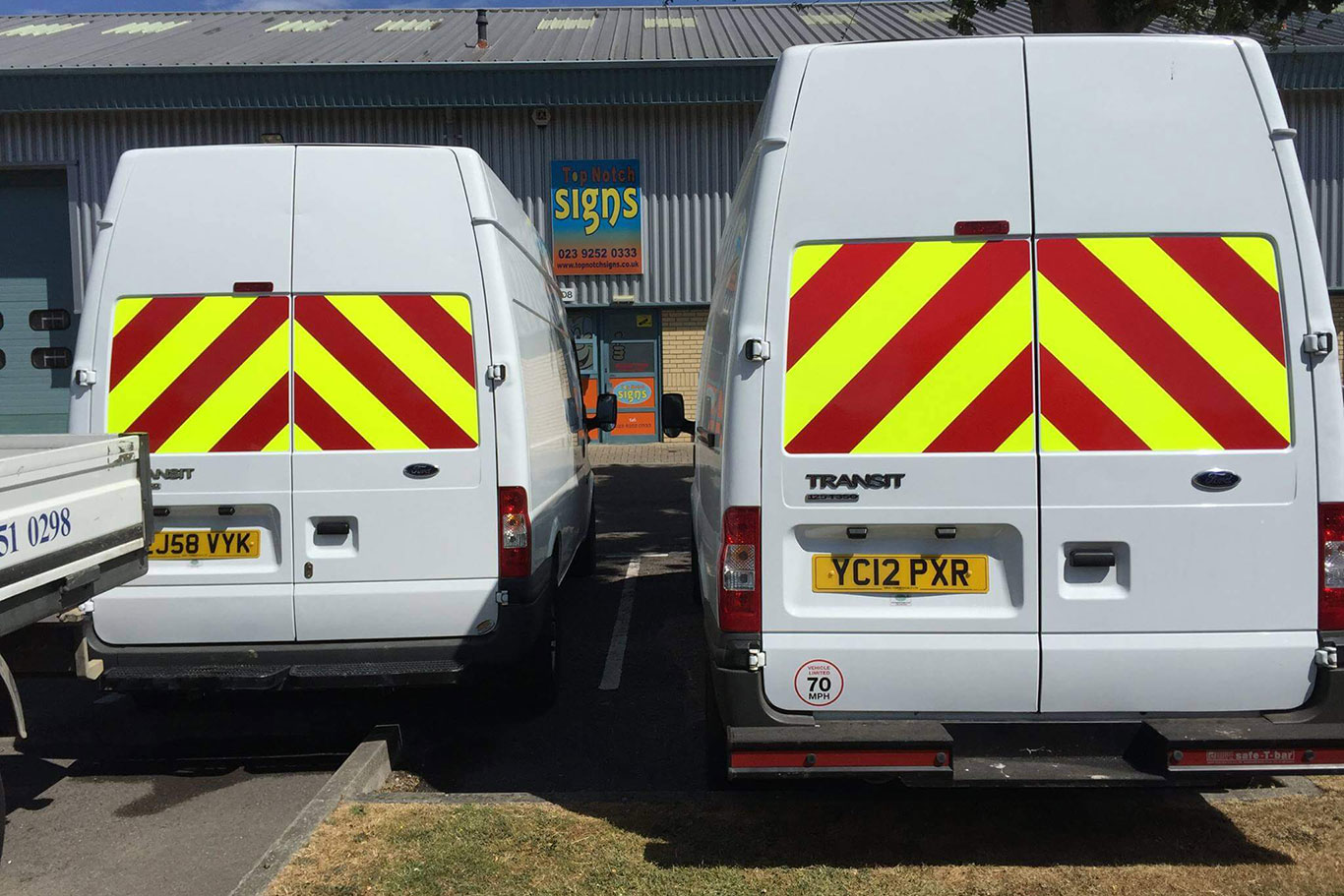
Magnetic chevrons can suit work vehicles that need removable markings, provided the panels are compatible, the kit fits securely and the marking specification meets the requirements of the intended work.
The main advantage is flexibility. You can remove the markings when appropriate without following an adhesive vinyl removal process. However, that flexibility comes with responsibilities for fitting, cleaning, inspection and storage.
Before choosing a magnetic kit, check the actual vehicle rather than assuming that any van with metal bodywork will be suitable. Panel materials, contours, repairs and existing graphics can all affect the decision.
A removable kit can be useful where a vehicle has more than one role and there is a clear reason to remove its markings between assignments.
For example, a shared work van might support a particular contract for part of the week and carry out different duties at other times. Where the relevant requirements allow it, removable markings could provide a practical arrangement.
Magnetic kits may also be considered for hired or leased vehicles, subject to the owner’s permission and the vehicle’s suitability. They should not be assumed acceptable simply because they can be removed.
Think about the complete working routine. Someone needs to know when the markings must be fitted, where the pieces are stored and how to check that the complete kit is present.
If the markings will remain in place for long periods, compare magnetic and self-adhesive options against the actual maintenance arrangements. Removability is most useful when the business can manage it consistently.
Magnetic chevrons need a suitable ferrous surface. They will not attach to every material used in commercial vehicle bodywork.
All About Chevrons specifically warns that magnetic kits will not stick to aluminium, plastic or composite panels. It also explains that some pieces shown within a vehicle kit may cover areas that are unsuitable for magnetic mounting, even where a magnetic option appears on the website. All About Chevrons
Check every area intended to carry a piece. A suitable upper door panel does not establish that the lower trim or an adjoining section will also accept magnetic material.
A simple magnet check can help identify an unsuitable panel, but attraction alone does not prove that the complete kit will fit securely. The shape, finish and available contact area still need assessment.
Provide photographs of the rear of the vehicle when discussing compatibility. Include close-up views of trim, windows, door fittings and any converted body sections.
Magnetic sheeting needs to make proper contact with the intended surface.
Raised mouldings, sharp contours, dirt and distorted material can interfere with that contact. A piece that bridges a recess or sits over a protruding fitting should not be treated as correctly installed merely because part of it holds.
HEXIS’s magnetic sheeting instructions advise against fitting over decorative mouldings or sharp folds. They also call for dry, dust-free contact surfaces and warn that filled or repeatedly repainted areas can reduce magnetic holding performance. Those instructions illustrate why surface condition matters, although the guidance for the actual kit supplied should take precedence. online.hexis.co.uk
Check the complete piece, particularly its edges. If an edge curls, lifts or fails to sit against the panel, stop and establish the cause before using the vehicle with that marking fitted.
Avoid improvising a fix with additional tape or trimming the kit without advice. Either action may change the supplied layout or conceal an underlying compatibility problem.
Magnetic mounting alone does not establish Chapter 8 compliance. It also does not answer whether a particular kit is suitable for a particular vehicle or assignment.
The assessment needs to consider the marking materials, layout, coverage, secure attachment and any requirements specified for the work. National Highways describes Chapter 8 as guidance supporting legal requirements and industry best practice for roadworks and temporary traffic management. National Highways
Ask the organisation responsible for the work whether its specification permits the proposed magnetic arrangement. Then obtain the relevant product information from the supplier.
Keep the questions separate:
A product described as a magnetic Chapter 8 kit still needs to be selected and used appropriately. Missing pieces, unsuitable panels or an obstructed layout remain issues regardless of the product description.
Follow the instructions for the supplied kit, beginning with clean, dry contact surfaces.
Check both the vehicle panel and the back of each magnetic piece before fitting. Place the correct pieces in their intended positions and confirm that they sit properly against the bodywork.
If a piece is misaligned, remove and reposition it using the recommended method. Avoid dragging it across the paintwork.
Master Magnetics advises against sliding magnetic sheeting to realign it and warns that material should not bridge vehicle mouldings. Its guidance also highlights the importance of full contact without trapped air pockets. These are useful principles to discuss with the supplier when confirming the procedure for your kit. Master Magnetics
For a multi-piece kit, retain a fitting photograph or simple position guide. This can help different drivers identify where each piece belongs and recognise when something is missing.
Care needs to include the surfaces behind the markings as well as their visible faces.
Removing a kit allows the vehicle panel and magnetic backing to be inspected and cleaned. Follow the supplier’s recommended intervals and methods, taking account of the vehicle’s working conditions.
Check for contamination, damaged edges, distortion and changes to the paintwork. Dirt trapped behind magnetic material can damage the finish, so cleaning only the visible chevron surface leaves part of the task unfinished. Master Magnetics
All About Chevrons lists a magnetic care sheet within its range. Obtain the relevant care information when ordering and make it available to anyone responsible for the vehicle. Chevron Kits in Stock
Do not transfer cleaning instructions or inspection intervals from an unrelated magnetic product without checking them. The supplied material and its instructions should guide the routine.
Arrange suitable storage before choosing a removable kit.
Pieces left loose among tools or equipment can become damaged, contaminated or misshapen. Storage should preserve their shape and protect the contact surfaces.
Follow the supplier’s instructions on flat storage, handling and any permitted rolling method. HEXIS, for example, warns against leaving magnetic material loose in a vehicle where it can deform. online.hexis.co.uk
For a shared fleet, keep each kit identifiable by vehicle or approved application. This helps prevent someone fitting a similar-looking piece from another van.
A dedicated storage location also makes it easier to check that all pieces have been returned and remain available for the next assignment.
Do not assume so. The additional layer changes the mounting surface. Ask the kit supplier to assess the actual arrangement, including the graphics and panel shape.
Only where each vehicle and the complete kit have been confirmed suitable. Similar vehicle sizes do not guarantee matching panel materials, door shapes or marking coverage.
Stop relying on that piece and investigate the cause. Check its condition, the contact surfaces and the fit, then obtain supplier advice before returning it to use.
Before ordering or fitting a magnetic kit:
Magnetic chevrons offer useful flexibility when the vehicle, product and working routine suit removable markings.
For help choosing an appropriate kit, contact All About Chevrons with your vehicle’s make, model, year and photographs of its rear panels.
Phone: 023 9252 0333
Email: info@allaboutchevrons.com