No products in the basket.
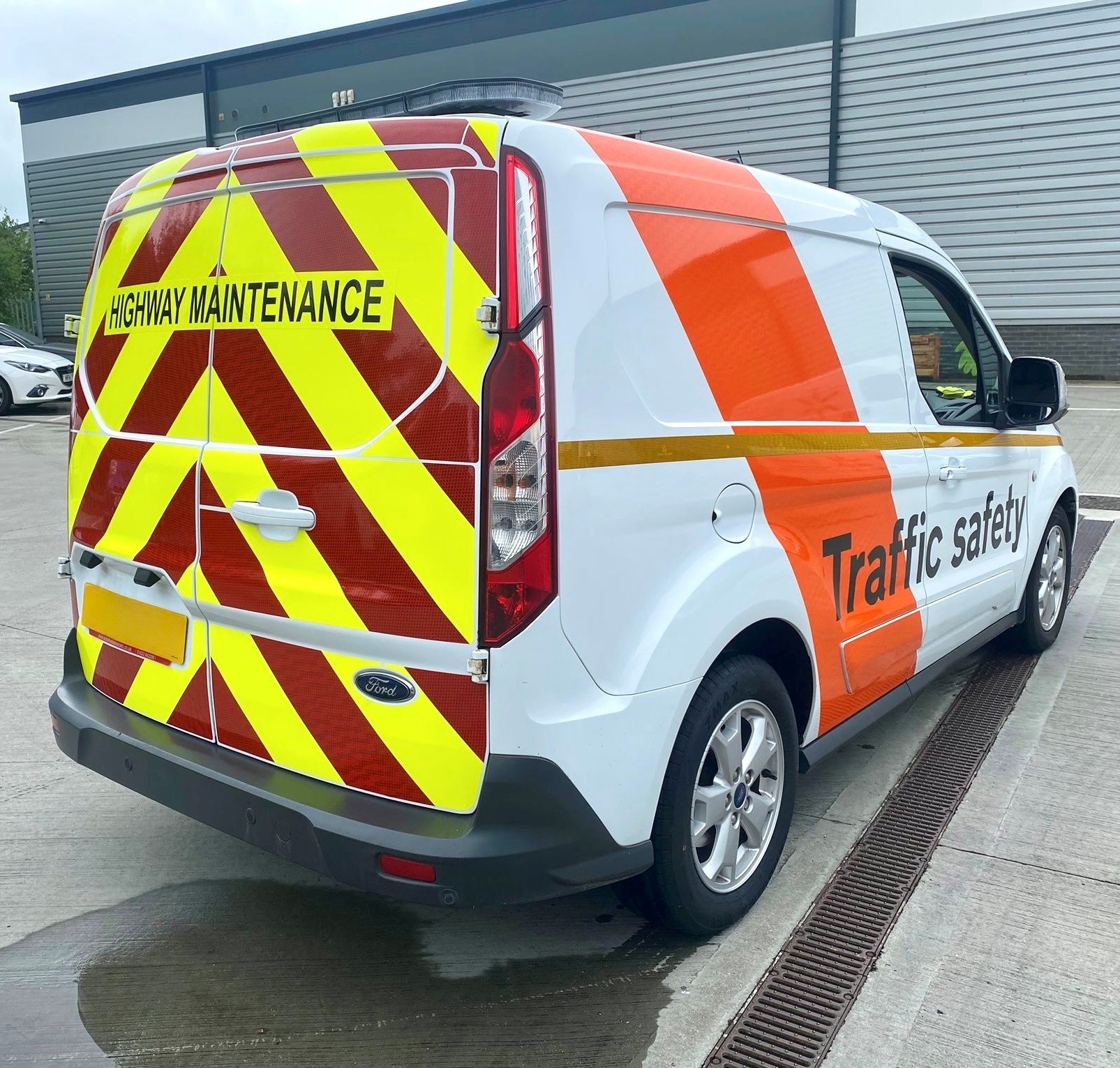
Chevron kits for vans are available for a wide range of vehicle makes, models and body styles, but that does not mean the same kit will fit every van. Rear doors, hinges, handles, badges, lights, reversing cameras and body contours all affect the shape and positioning of the markings.
Most conventional panel vans can be fitted with chevrons, provided a suitable vehicle-specific or correctly measured kit is selected. The important question is therefore not simply whether chevrons can be fitted, but which kit is appropriate for the exact vehicle.
Ordering a kit based only on the manufacturer or approximate size of the van can result in gaps, misaligned stripes or reflective material covering important components. Before buying, you should identify the full model, wheelbase, roof height, model year and rear-door arrangement.
Are chevron kits made for specific van models?
Many chevron kits are designed for a particular van model and rear configuration. The material is cut into sections that follow the available body panels while avoiding equipment such as lights, handles and number plates.
A kit designed for one model will not necessarily fit another, even if the vans look similar or have comparable external dimensions. Differences of only a few centimetres can affect the way the stripes line up across the rear.
Vehicle manufacturers may also change rear-door designs during a model’s production life. A newer version may have different lights, hinges or body creases from the previous generation. This is why the registration year alone may not provide enough information to confirm compatibility.
A vehicle-specific kit can take account of:
Selecting the closest-looking kit is not a reliable substitute for checking these details. If the exact configuration is unclear, photographs of the rear of the van can help a supplier identify the most suitable option.
What parts of a van affect chevron kit compatibility?
A van’s rear is rarely a completely flat, uninterrupted surface. Even large panel doors contain fittings and contours that must be considered when planning the markings.
Rear-door design
Twin rear doors are common on commercial vans, but their proportions and layouts vary. Some doors divide evenly in the centre, while others use an offset split. The chevron sections need to align properly across this division while still allowing both doors to open normally.
Tailgate models require a different layout. The shape of the panel, position of the glass and location of the release handle can all change the amount of usable space.
A kit designed for unglazed doors may not suit a van with rear windows. Reflective material should not be applied across the glass unless the particular product and layout are designed for that purpose.
Hinges and handles
External hinges interrupt the available application area. Vinyl should not bridge a moving hinge or be positioned where normal operation will repeatedly stretch, rub or damage it.
Door handles, locks and manufacturer badges create similar challenges. Cutting around these components during installation without an appropriate template can produce rough edges or break the intended chevron pattern.
Lights and number plates
A chevron kit must not obstruct the rear lights, reflectors or number plate. These components need to remain visible and functional.
Vehicle-specific kits are normally divided into panels that work around the original lighting arrangement. This is one reason that a kit for one van cannot automatically be transferred to another model.
Body contours and accessories
Deep pressings, sharp curves and textured plastic areas can make vinyl application more difficult. A kit should be designed to sit on suitable painted bodywork rather than being forced across surfaces to which it may not adhere correctly.
Rear-mounted accessories can also affect compatibility, including:
A van fitted with aftermarket equipment may require an adapted or custom chevron layout rather than the standard kit for that model.
Can universal chevron kits be fitted to vans?
Universal or chevron-tape layouts can be suitable in some circumstances, but they require more measuring, cutting and planning during installation. They are not automatically the best option for every vehicle.
A vehicle-specific kit arrives in pre-cut sections intended to correspond with the rear panels. This can make it easier to achieve a consistent pattern and avoid important equipment. A universal kit usually relies on the installer to determine where every strip should begin and end.
Universal products may be useful for:
However, the flexibility of a universal kit creates more room for installation errors. Poorly positioned strips may fail to line up, leave excessive gaps or cover equipment that needs to remain visible.
Where compliance is important, the final result matters more than whether the material was supplied as a universal or pre-cut product. The markings must be appropriate for the vehicle’s use and fitted in a way that maintains their intended visibility.
Do all vans need Chapter 8 chevrons?
Not every van on UK roads requires Chapter 8 markings simply because it is a commercial vehicle. The relevant consideration is how and where the vehicle is used.
Chapter 8 is part of the Traffic Signs Manual and provides guidance for road works and temporary traffic-management situations. The official Traffic Signs Manual includes operational guidance for vehicles involved in implementing, maintaining and removing temporary traffic-management arrangements.
High-visibility rear markings are particularly relevant to vehicles that stop on the highway for works or inspection purposes. This may include vans used for highway maintenance, utilities, traffic management and certain construction or infrastructure activities.
A tradesperson’s van used for travelling between private properties does not automatically have the same marking requirements as a vehicle routinely stopping within or near live road works. However, fleet operators should assess the vehicle’s actual duties rather than relying solely on its job title.
Factors to consider include:
It is also important to distinguish guidance from specific legal and contractual obligations. Chapter 8 is widely used as the recognised standard for road-work safety arrangements, while particular contracts, highway authorities or working environments may impose their own requirements.
If there is uncertainty, the organisation responsible for traffic management or health and safety should confirm what applies to the work being undertaken.
What is the difference between a full kit and a partial kit?
A full rear chevron kit is designed to cover most of the suitable rear-facing bodywork while working around the vehicle’s equipment. Partial kits cover a smaller area, such as the lower part of the doors.
The most suitable option depends on the amount of usable bodywork and the vehicle’s operating environment. More coverage can improve conspicuity, but simply applying more material does not correct a poorly planned layout.
A full kit may be appropriate where:
A partial layout may be considered where:
The decision should be based on the vehicle, its work and any applicable specification. A smaller kit should not be chosen solely to reduce cost if it does not meet the operational requirement.
Can chevrons be fitted over existing graphics?
Applying new chevrons over old vinyl, fleet branding or damaged adhesive is generally best avoided. The new material needs a clean, sound and suitable surface if it is to adhere correctly.
Old graphics can create raised edges beneath the chevrons. Dirt and moisture may collect around these edges, while the underlying vinyl could lift and take the new markings with it.
Before fitting a kit, inspect the rear of the van for:
Existing material should be removed carefully, and adhesive residue should be cleaned away using a product suitable for the vehicle’s finish. Damaged paintwork may need professional attention before installation.
Fleet branding can still be incorporated into an appropriate layout. A custom chevron kit may be used where a business needs to combine safety markings with an approved logo or fleet identity without compromising the clarity of the rear pattern.
Can a chevron kit be moved to another van?
Chevron kits are intended to remain attached to the vehicle for which they were selected and fitted. Once removed, the material should not normally be reused on another van.
Removal can stretch, crease or tear the vinyl. The adhesive may also lose its ability to bond reliably. Even if the kit appears intact, the panel shapes and cut-outs are unlikely to correspond with a different vehicle.
If a van is replaced, the new vehicle should be assessed separately. This remains important when a fleet purchases the same model because the replacement could be a different generation, roof height or rear-door configuration.
What should you check before ordering a van chevron kit?
A short compatibility check can prevent wasted material and installation problems. Before placing an order, confirm the following information.
Identify the exact vehicle
Record the full make, model and model year. Check the wheelbase, body length and roof height rather than relying on a general description such as “large Transit” or “medium Sprinter”.
Check the rear-door configuration
Confirm whether the van has twin doors or a tailgate, and whether those doors are glazed. Look for variations such as an offset split or externally mounted spare wheel.
Photograph the rear
Take a clear, straight-on photograph with the doors closed. Additional close-up images may be useful where the van has accessories, unusual hinges or aftermarket equipment.
Inspect the application surface
Check that the paint is secure and the panels are clean and undamaged. Identify plastic trim, existing graphics and repaired areas that may affect adhesion.
Confirm how the vehicle is used
Decide whether the van needs a general visibility treatment, a Chapter 8-style kit or markings that meet a specific contract requirement. If the van works on roads, refer to the relevant risk assessment and traffic-management plan.
Choose suitable materials
The reflective and fluorescent components should be appropriate for their intended purpose and expected working environment. A professional work vehicle may be exposed to heavy rain, road salt, mud, pressure washing and frequent cleaning, so durability is an important consideration.
All About Chevrons supplies chevron kits for professional vans and commercial vehicles, with options for different vehicle types and fleet requirements.
Frequently Asked Questions
Can I cut a chevron kit to fit my van?
Minor trimming may form part of the installation process, depending on the product, but a kit for a completely different model should not be treated as a suitable starting point. Excessive cutting can disrupt the pattern and leave insufficient material for proper coverage.
Can chevrons be fitted to a van with rear windows?
Yes, but the layout must account for the reduced painted surface. A kit designed for glazed doors may place the markings around the windows rather than across them. Confirm the door type before ordering.
Do vehicle badges need to be removed?
That depends on the kit design and the position of the badges. Some kits are cut around them, while removal may produce a cleaner result in other cases. Badges should only be removed when it is safe and appropriate to do so.
Can I install rear chevrons myself?
Self-installation may be possible with suitable preparation, a clean working environment and careful alignment. Larger or more complex layouts can be difficult to fit without creases or trapped air, so professional application may be preferable where appearance or compliance is critical.
Will a kit fit if my van has a reversing camera?
A suitable kit should leave the camera and its field of view unobstructed. Because camera positions can vary by model and specification, confirm this detail before ordering.
Are chevron kits suitable for pickup trucks?
Some pickups and commercial 4×4 vehicles can be fitted with chevron markings, but they require a kit designed around the tailgate, handles, lights and any rear accessories. A standard panel-van kit is unlikely to fit correctly.
Can fleet branding be added to a chevron kit?
Custom kits can incorporate approved business branding where the design leaves the safety pattern clear and effective. The layout should remain easy for approaching motorists to recognise.
Does the van’s colour affect the kit?
The underlying colour can influence the overall appearance, but the correct fluorescent and reflective materials provide the intended contrast. Any uncovered sections and existing fleet graphics should still be considered when planning the design.
Most vans can be fitted with rear chevrons, but there is no single chevron kit that fits every vehicle. The correct choice depends on the exact model, production generation, door arrangement, bodywork, accessories and working environment.
Checking these details before ordering helps create a neater installation, protects essential vehicle equipment and ensures the markings are appropriate for their intended purpose. For road-working vehicles, kit selection should also be supported by the relevant Chapter 8 guidance, risk assessment and contractual requirements.
To find a suitable kit for your vehicle, explore the range of Chapter 8 chevrons or contact All About Chevrons for help checking compatibility.
Phone: 023 9252 0333
Email: info@allaboutchevrons.com
Find out more: All About Chevrons