No products in the basket.
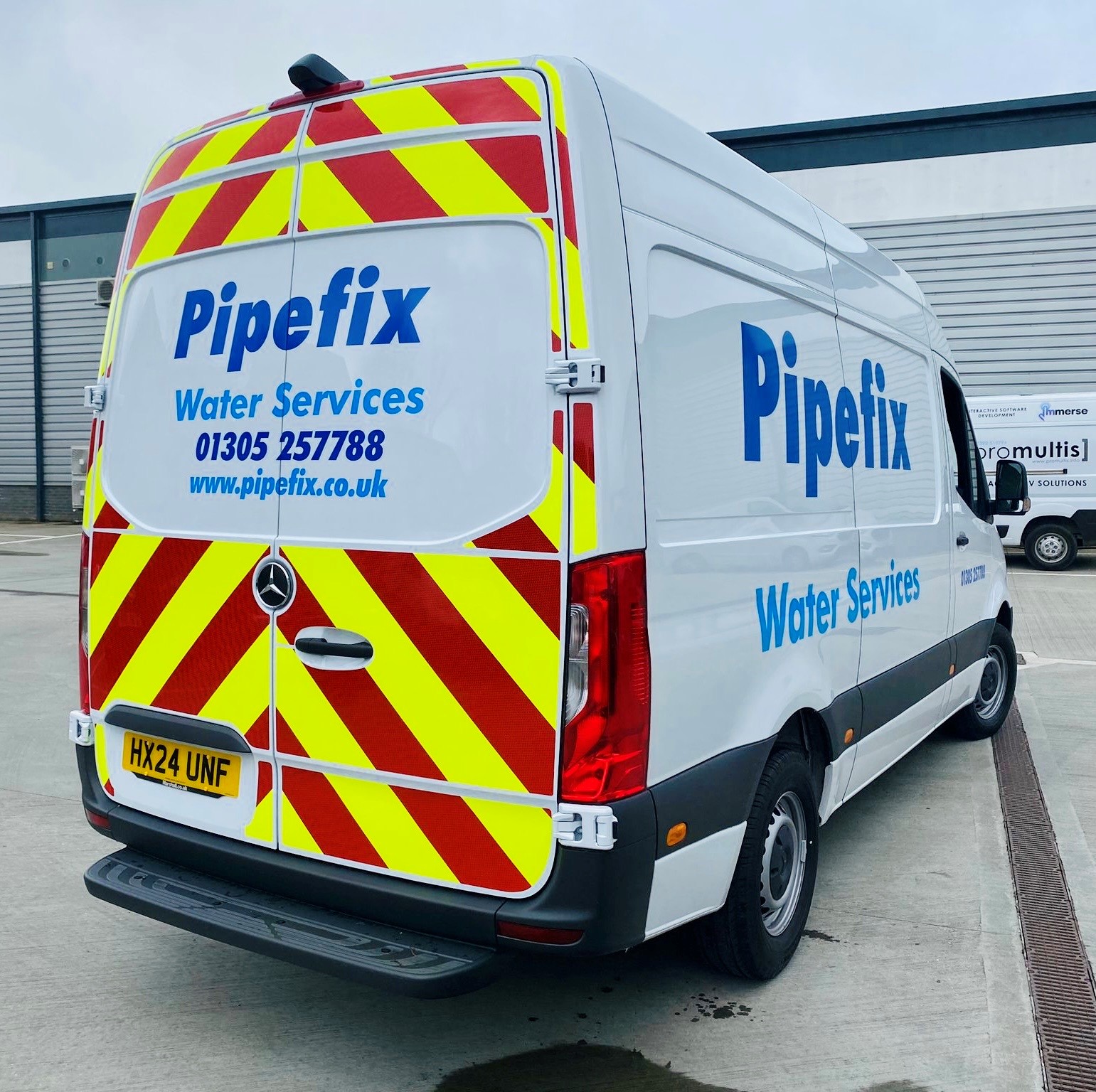
Custom chevron kits can include company branding, but the design needs to be handled carefully. A work vehicle still needs to remain highly visible, practical and suitable for the environment it operates in. Branding can be added, but it should not reduce the purpose of the chevrons, which is to improve rear visibility and help other road users identify the vehicle more quickly.
For many UK businesses, custom chevrons are a useful way to combine safety markings with a professional fleet image. A van used for highways, utilities, construction, maintenance or roadside work may need rear chevrons for visibility, while the business also wants to display its logo, contact details or recognisable colours.
The key is balance. The chevron pattern should remain clear, reflective where required and easy to recognise. Branding should support the vehicle’s professional appearance without making the rear markings cluttered or harder to see.
Supporting Questions:
Company branding can be added to a custom chevron kit in several ways. The most common approach is to include a logo, company name, web address, phone number or fleet identification details within the rear layout of the vehicle.
This might involve placing branding in a clear space above, below or alongside the chevron pattern, depending on the vehicle design. On some vans, the rear doors provide enough room for both safety markings and branding. On others, the layout may be more limited because of windows, handles, badges, lights, ladders, cameras or sensors.
A custom design should take these details into account before production. The aim is to create a layout that looks professional, fits the vehicle properly and keeps the chevrons visually effective.
Branding can be useful for:
The best branded chevron kits do not look like branding has simply been added as an afterthought. They are designed around the vehicle, the working environment and the visibility requirements.
Will company branding affect Chapter 8 suitability?
Company branding can affect Chapter 8 suitability if it is placed badly or makes the rear markings less clear. That does not mean branding cannot be used. It means the design needs to preserve the purpose and visibility of the chevrons.
Chapter 8 guidance is associated with vehicles working on or near roads, particularly in temporary traffic management, highways, utilities and maintenance environments. Rear markings are intended to help make vehicles more conspicuous to other road users. If branding interrupts the chevron pattern too heavily, uses distracting colours or reduces reflective coverage, the design may not be suitable for the job.
A good custom chevron kit should therefore avoid designs that:
For vehicles that need to meet a specific client, local authority or contract requirement, it is sensible to check those requirements before approving the design. Some organisations may have their own rules about rear markings, logo placement or permitted wording.
The safest approach is to treat the chevrons as the priority and the branding as a carefully integrated addition.
What branding works best on rear vehicle chevrons?
The most effective branding on rear chevrons is simple, clear and easy to read. A work vehicle is often viewed while moving, from a distance or in poor conditions. That means small text, over-detailed graphics and cluttered layouts are rarely effective.
A clear logo and short contact detail can often work better than trying to include too much information. For example, a web address may be easier to read than a long list of services. A bold company name may be more useful than several small icons.
Good rear vehicle branding usually follows a few practical rules:
The rear of a van is not the same as a brochure or website page. Other road users may only have a few seconds to see the vehicle. The branding should be instantly understandable.
Where should branding sit on a chevron kit?
The best position depends on the vehicle’s rear layout. Some vans have full solid rear doors, while others have windows, handles or shaped panels that limit the available space. Larger commercial vehicles may offer more flexibility, while smaller vans may need a more restrained design.
Common branding positions include:
It is important not to place branding where it will interfere with lights, reflectors, plates, sensors or cameras. It should also avoid awkward cuts across door handles and hinges where the design may look untidy or wear more quickly.
For many vehicles, the best layout is one where the chevrons take up the main rear visibility area and the company branding sits in a clearly defined space that does not weaken the pattern.
Are custom chevrons useful for fleets?
Custom chevrons are particularly useful for fleets because they help create consistency. If a business runs multiple vans, the vehicles should ideally look like part of the same operation. This is important for public trust, site recognition and internal fleet management.
A consistent branded chevron layout can help fleet vehicles look more professional and easier to identify. This is useful for contractors working across different locations, utilities teams attending public sites, highways vehicles operating near traffic, and businesses with multiple engineers or drivers on the road.
Custom fleet chevrons can help with:
The challenge is that fleets often include different vehicle types. A business may have small vans, long wheelbase vans, tippers, pickups and specialist vehicles. Each rear layout may need a slightly different design, but the overall brand style should remain consistent.
This is where custom design is useful. Instead of forcing one generic layout onto every vehicle, the design can be adapted to each model while keeping the same overall visual identity.
Can branding be added without making the vehicle look too busy?
Yes, but it requires restraint. One of the most common mistakes with branded vehicle markings is trying to include too much at once. A rear chevron kit already has a strong visual pattern. Adding a logo, phone number, web address, accreditations, service list and social media icons can quickly make the rear of the vehicle look cluttered.
A busy design is not just a branding issue. It can reduce readability and weaken the impact of the chevrons.
The best approach is to decide what the rear of the vehicle needs to achieve. In most cases, the priorities are:
That does not mean other branding is impossible, but it may be better placed on the side panels, bonnet or cab doors rather than competing with rear safety markings.
For many businesses, the rear chevron area should carry the most essential brand information only. The rest of the vehicle can then support wider marketing and fleet identity.
What vehicle details are needed for custom chevrons?
Before ordering custom chevron kits, you should gather clear vehicle information. This helps make sure the design fits properly and avoids practical issues during fitting.
Useful details include:
Photos are also very useful. A straight-on rear photo can help confirm the layout, especially where the vehicle has accessories or variations from the standard model. If the kit needs to match other vehicles in the fleet, photos of existing vans can also help keep the design consistent.
For larger fleets, it may be worth creating a standard approach for each vehicle type. That makes future orders simpler and helps avoid each van being designed differently.
What logo files should you provide?
For best results, logo files should be supplied in a high-quality format. A low-resolution image copied from a website may not print clearly at vehicle size. It can appear blurry, pixelated or poorly shaped once enlarged.
Where possible, provide vector artwork such as an EPS, AI or PDF file. These formats allow the logo to be scaled cleanly. If those are not available, a high-resolution PNG or JPEG may work, but it should be checked before production.
It is also useful to provide brand guidelines if the business has them. These may include logo spacing, approved colours, typography and usage rules. Even simple guidance can help the finished chevron kit look more professional and consistent with the rest of the company’s marketing.
Can reflective materials be used with branding?
Reflective materials can be used as part of vehicle markings, but the exact approach depends on the design and purpose. The chevron markings themselves are usually the main reflective feature. Branding may be printed, cut or integrated depending on the material and layout.
Not every part of the branding needs to be reflective. In many cases, it is more important that the chevrons provide the visibility and the branding remains clear and legible. However, for certain fleet requirements, reflective lettering or additional reflective details may be considered.
The important point is that reflectivity should be planned rather than assumed. A kit should be designed around how the vehicle is used, whether it operates at night, whether it stops near live traffic and what visibility expectations apply.
Are custom chevron kits worth it for small businesses?
Custom chevron kits are not only for large fleets. They can also be useful for small businesses, sole traders and contractors who want their vehicles to look professional while improving visibility.
For example, a grounds maintenance contractor, arborist, utility subcontractor or construction tradesperson may have one or two vans but still need a practical rear marking solution. A custom kit can help the vehicle look more credible on-site and make the business easier to identify.
For smaller businesses, the key is to keep the design simple and purposeful. A clean logo, clear rear chevrons and sensible contact information can create a strong professional impression without looking over-designed.
What should you check before approving the design?
Before approving a branded chevron kit, look at the design from a practical point of view. Do not only judge it as a flat artwork proof. Think about how it will look on the actual vehicle and how it will be seen by other road users.
Check:
It can help to view the proof at a smaller size or step back from the screen. If the branding becomes difficult to read when reduced, it may also be difficult to read on the road.
Frequently Asked Questions
Can my logo be added directly onto rear chevrons?
Yes, a logo can often be included as part of a custom chevron layout. However, it should be positioned carefully so it does not reduce the visibility or clarity of the chevron markings.
Can branded chevrons still be Chapter 8 suitable?
They can be, provided the design keeps the safety markings clear and appropriate for the vehicle’s use. Branding should not overpower the chevrons or interrupt the pattern in a way that reduces visibility.
What details should I include on a branded chevron kit?
Most businesses keep rear branding simple. A company logo, name, website or phone number is usually enough. Longer service lists and small text are often better placed elsewhere on the vehicle.
Can custom chevron kits be made for different vans in the same fleet?
Yes. Custom chevron designs can be adapted for different vehicle models while keeping the same overall brand style. This helps fleets look consistent even when the vehicles are not identical.
Do I need professional artwork for branded chevrons?
High-quality artwork is strongly recommended. Vector logo files are best because they can be scaled clearly. Poor-quality image files may not print cleanly on vehicle graphics.
Final thoughts
Custom chevron kits can include company branding, but the design needs to put visibility first. The best results come from a clear, practical layout that keeps the chevrons effective while adding brand identity in a controlled and professional way.
For businesses and fleets, this can be a strong combination. The vehicle remains visible and work-ready, while the company also benefits from a consistent, recognisable appearance on the road and on-site.
All About Chevrons supplies custom chevrons, Chapter 8 chevron kits and reflective vehicle markings for commercial vehicles and fleets across the UK. For tailored options, visit /custom-chevrons, browse vehicle-specific options at /chevron-kits or explore Chapter 8 markings at /chapter-8-chevrons.
Phone: 023 9252 0333
Email: info@allaboutchevrons.com
Find out more: https://allaboutchevrons.com/
View the Chapter 8 compliance guide.