
No products in the basket.
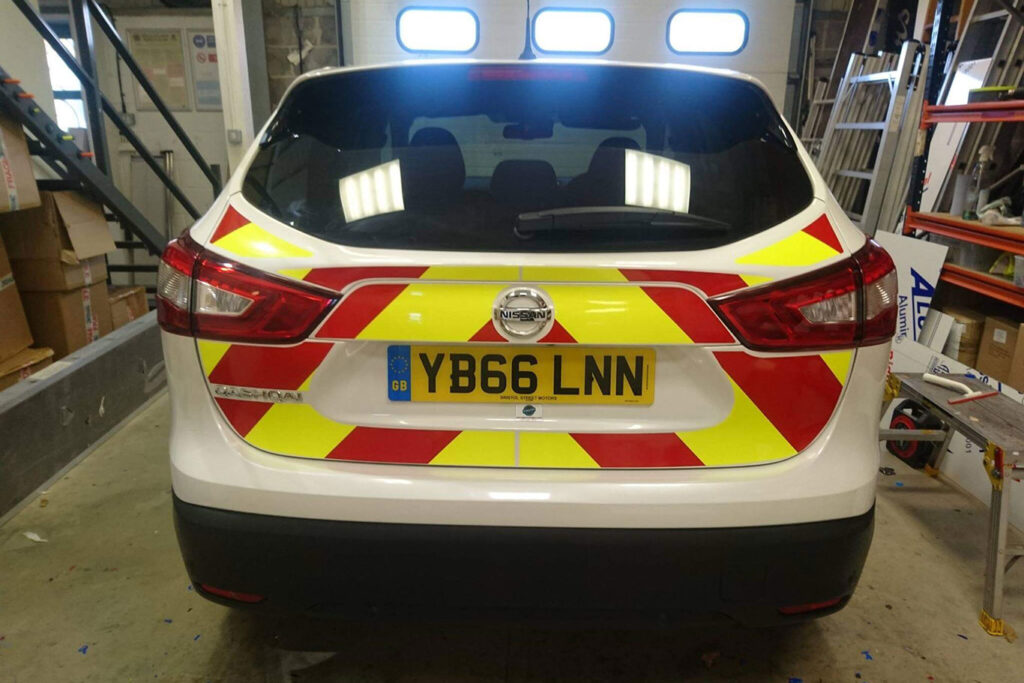
Chapter 8 compliance markings are a familiar sight on vans and commercial vehicles across the UK. These distinctive red and yellow chevron patterns are used to warn other road users that a vehicle may be stopping, working, or operating in potentially hazardous locations. For businesses that operate on highways, streets, or busy public areas, using correct chapter 8 compliance markings is an important part of responsible fleet safety.
Despite being widely used, there is often confusion about what chapter 8 compliance markings actually involve. This guide explains their purpose, the correct materials to use, and how businesses can ensure their vehicles display appropriate and effective safety markings.
Chapter 8 compliance markings refer to high-visibility vehicle chevrons that follow recognised UK industry best practice. They are commonly fitted to vehicles used by contractors, utility companies, highways maintenance teams, recovery operators, and local authorities. The aim of these markings is to make vehicles highly visible to approaching traffic, particularly when they are stopped at the roadside.
It is important to note that these vehicle markings are not fixed road signs. As a result, standards that apply to permanent traffic signage are not applicable to vehicle chevrons. Instead, the focus is on using materials and designs that deliver maximum visibility and clear warning to other road users.
A key element of proper chapter 8 compliance markings is using the correct combination of materials. Compliant vehicle chevron kits are produced using two specific components. The red sections must be retro-reflective, while the yellow sections must be fluorescent and non-reflective. The correct description is always “red retro-reflective and fluorescent yellow non-reflective”.
This distinction is essential for safety and accuracy. The fluorescent yellow material provides strong visibility in daylight but does not reflect light. The red material reflects light from headlights back toward drivers at night. Any description that refers to “fluorescent yellow reflective vinyl” is incorrect and should be avoided.
Chapter 8 compliance markings are particularly important for any organisation whose vehicles regularly stop or work on the public highway. This includes tradespeople, engineers, road maintenance crews, breakdown recovery vehicles, and many other types of commercial operators.
Even when not legally mandatory, fitting high-visibility chevrons is widely regarded as best practice. They help protect employees working near live traffic and reduce the risk of collisions caused by poor vehicle visibility.
Chapter 8 compliance markings are available in a variety of formats to suit different vehicles and working styles. Self-adhesive kits provide a permanent solution and are ideal for dedicated fleet vehicles. Magnetic kits offer flexibility for temporary use or shared vehicles.
Pre-assembled vehicle-specific panels are another popular option. These are designed to match the exact shape of particular van models, providing a professional finish and quick installation. Choosing the right format depends on how the vehicle is used and how long the markings need to remain in place.
Correct installation is crucial for chapter 8 compliance markings to be effective. Chevrons should be positioned to maximise rear visibility and applied to clean, dry surfaces. Poorly fitted or damaged markings can reduce safety benefits and create an unprofessional appearance.
Many specialist suppliers provide ready-to-fit kits and clear fitting guidance to help customers achieve the best results. Using high-quality, professionally produced products makes installation easier and ensures long-term durability.
Understanding chapter 8 compliance markings helps businesses make informed decisions about vehicle safety. By using the correct red retro-reflective and fluorescent yellow non-reflective materials, and by choosing high-quality kits from reputable suppliers, organisations can significantly improve the visibility and safety of their vehicles.
For expert guidance and a full range of compliant vehicle marking solutions, visit: https://allaboutchevrons.com/chapter-8-traffic-management/
Q1: Are chapter 8 compliance markings legally required?
A1: They are not mandatory for every vehicle, but they are strongly recommended as best practice for any vehicle that stops or works on public highways.
Q2: What materials should be used for compliant chevrons?
A2: The correct specification is red retro-reflective material combined with fluorescent yellow non-reflective material.
Q3: Can magnetic chevrons be used for chapter 8 compliance markings?
A3: Yes. Magnetic kits are a practical option for temporary use, provided they use the correct materials and are securely fitted.
For expert advice contact All About Chevrons on 023 9252 0333 or email info@allaboutchevrons.com.
View the Chapter 8 compliance guide.